
Last updated November 22, 2026
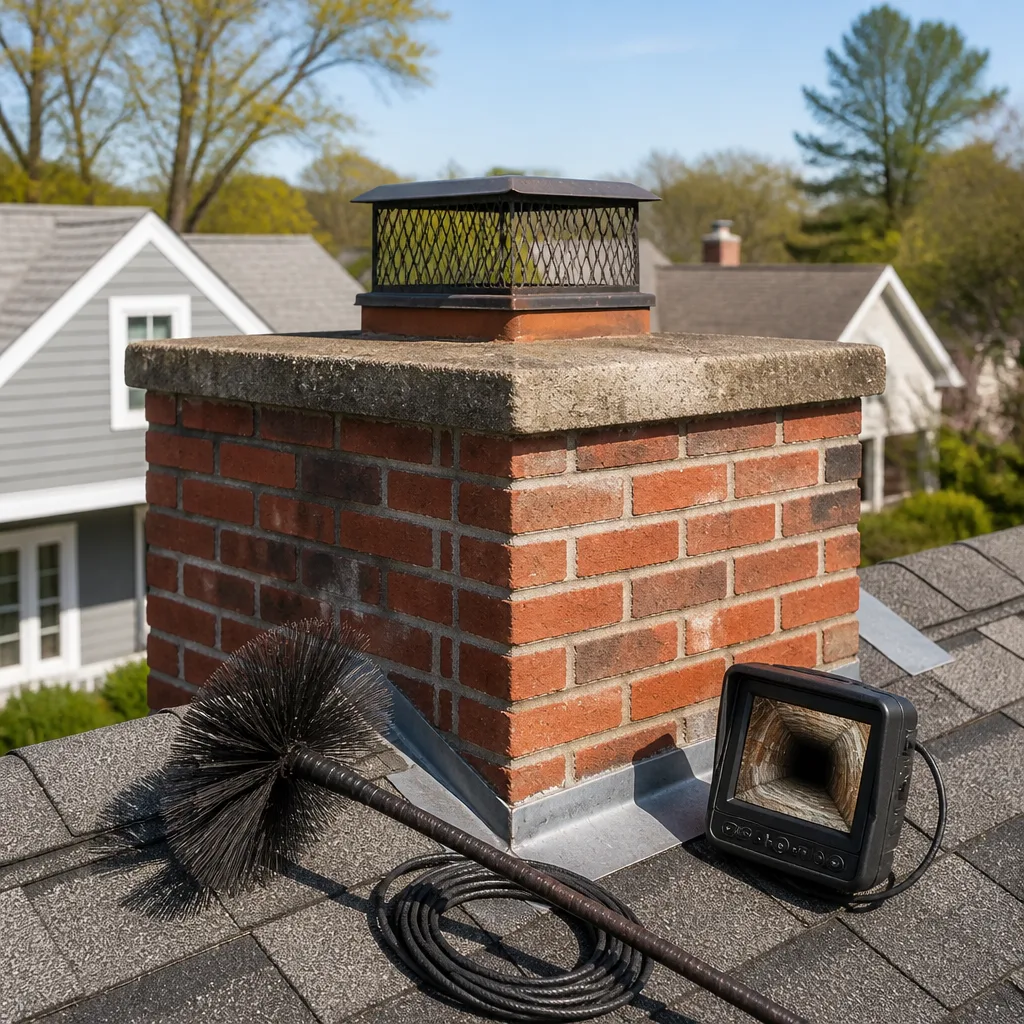 Sweep & inspection
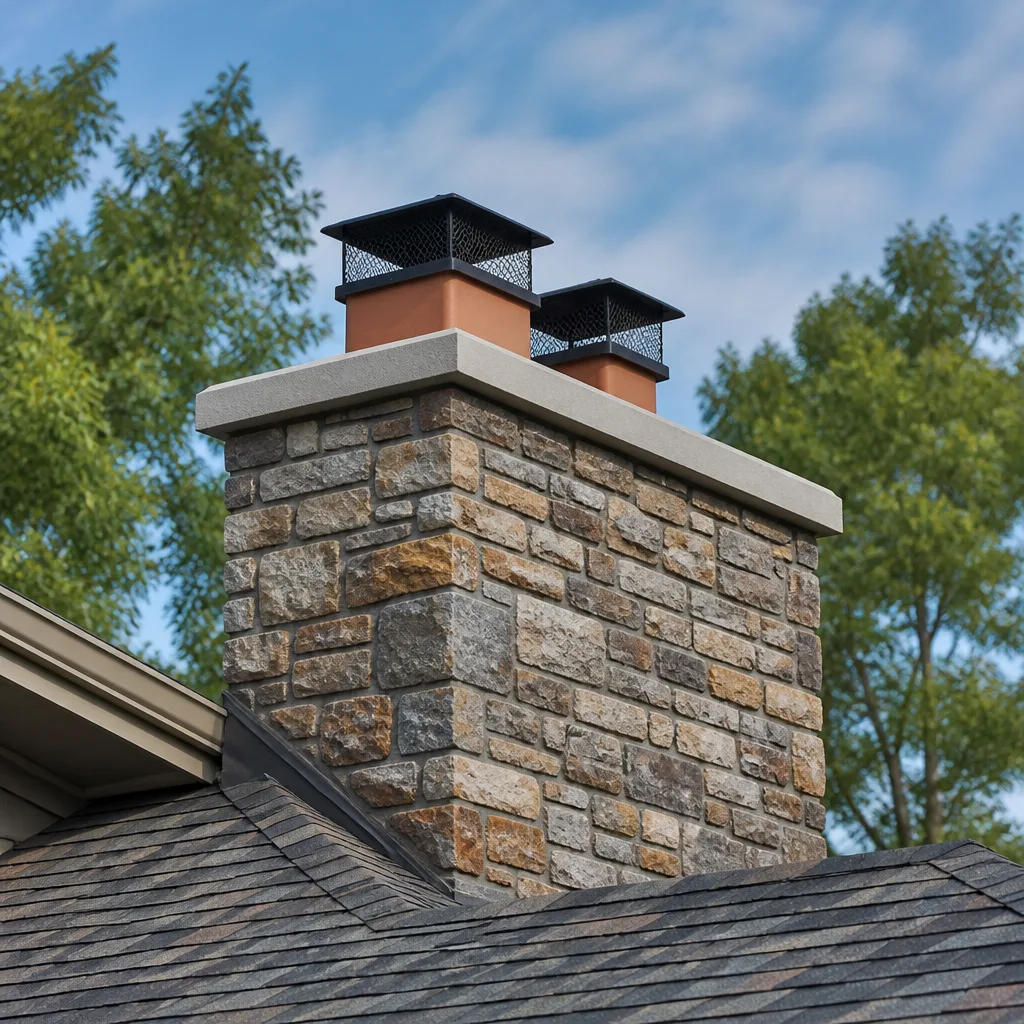 Caps & crowns
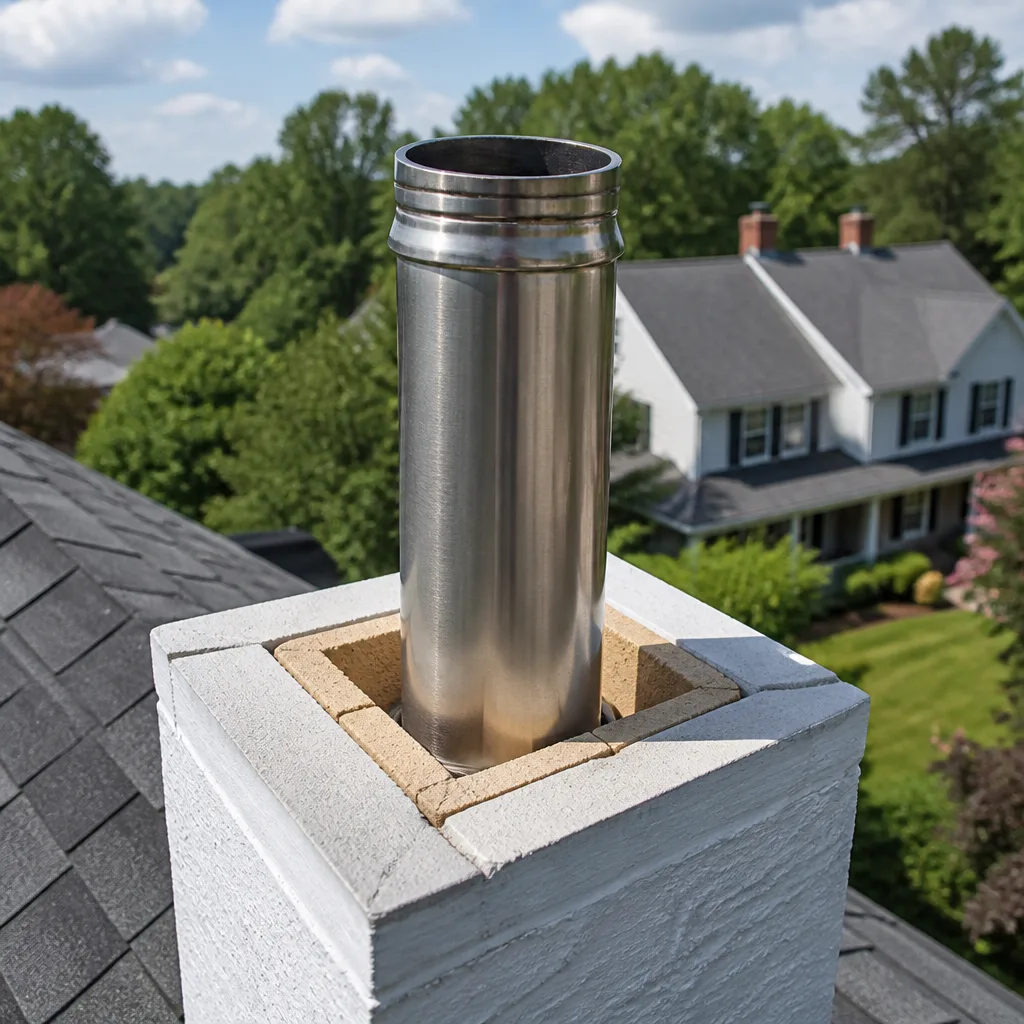 Flue relining
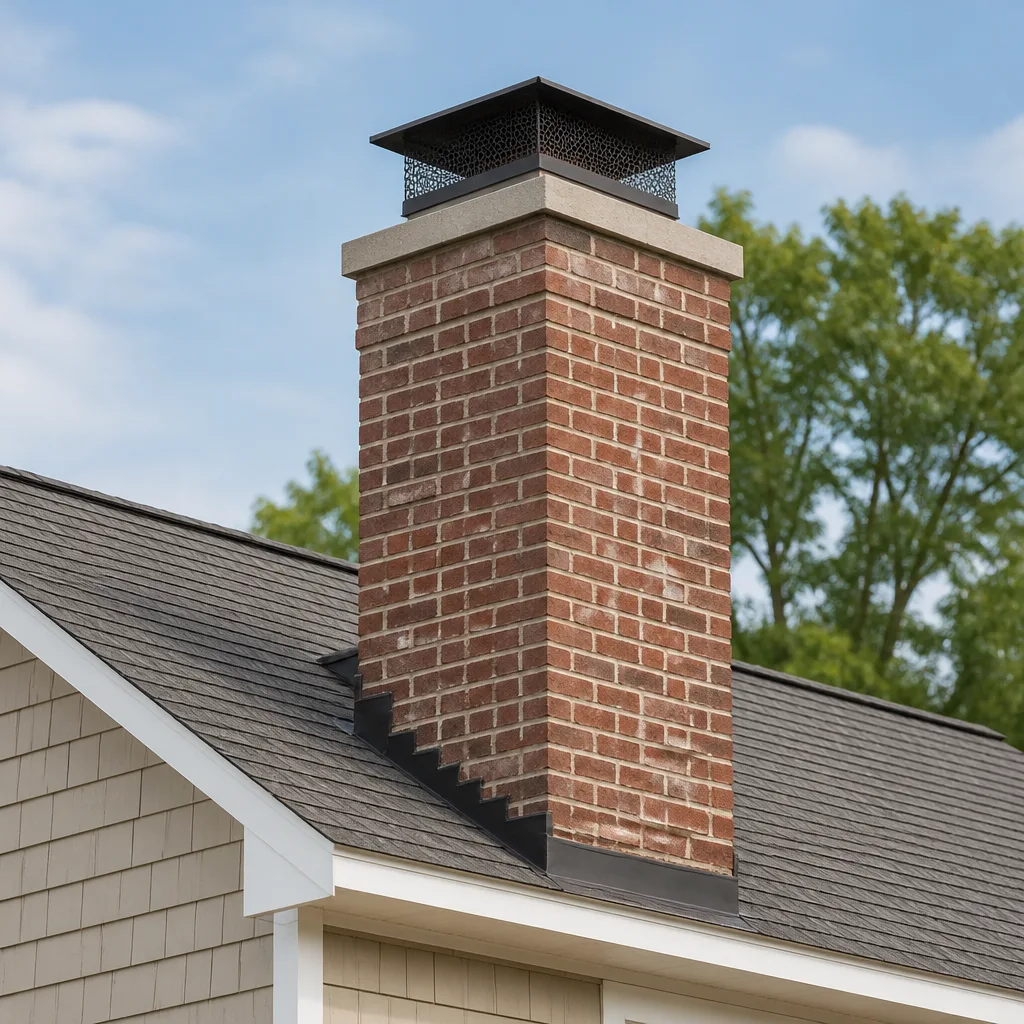 Masonry repair
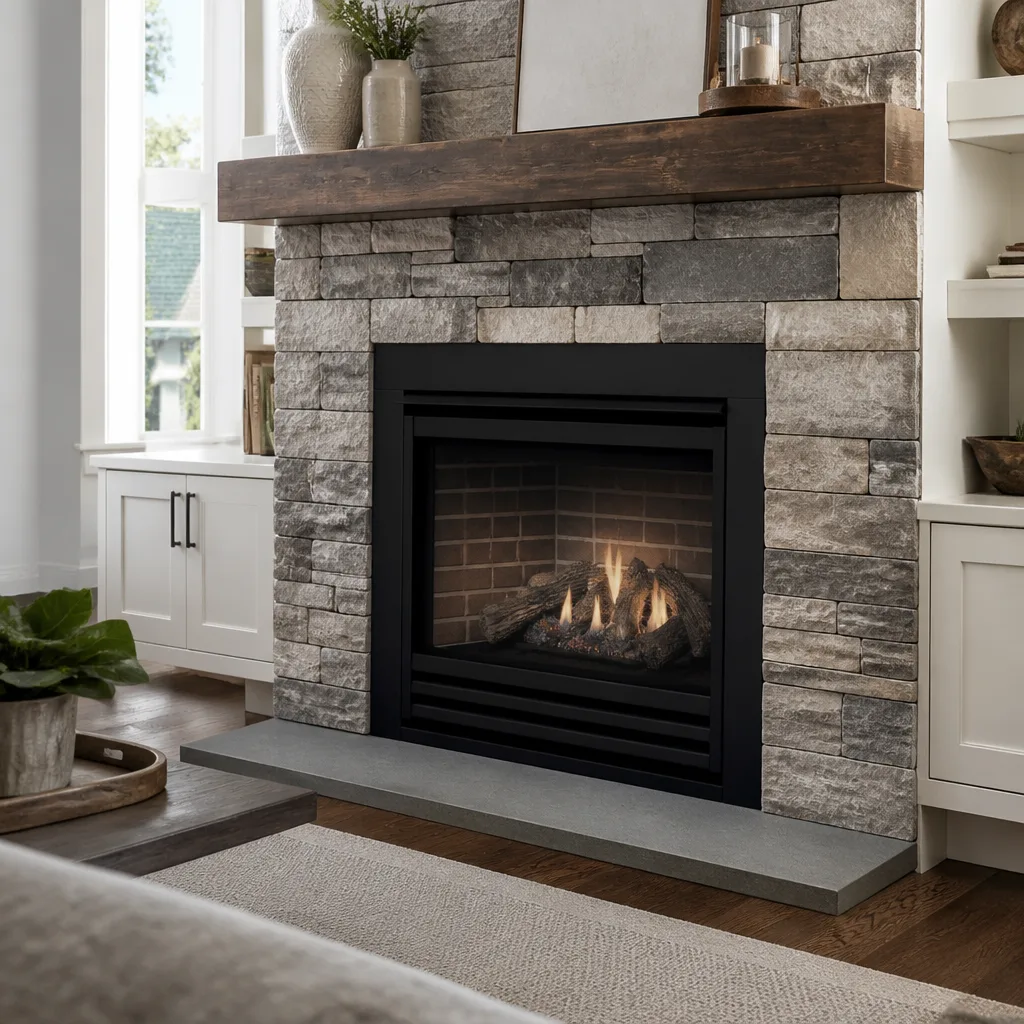 Gas fireplace service
Level 1 sweep and inspection to the NFPA 211 annual standard - flue, crown, cap, and flashing checked and photographed
Chimney sweep logs do not sweep chimneys. They loosen some creosote - which then falls where a brush and vacuum still have to collect it.
Chimney Cleaning Warning Signs: A Ballantyne Homeowner’s Reference Guide
A white stain on your chimney’s exterior isn’t a cosmetic issue. It’s your chimney telling you that water is moving through the masonry in a direction it shouldn’t be, and that message gets more expensive to answer the longer you wait. Most warning-sign articles hand you the same list: creosote, cracks, smoke. That list is useful but shallow, because it tells you what you’re seeing without telling you what it means. This guide connects each visible sign to the specific failure underneath it, so when you look at your own chimney in Ballantyne you’ll know whether you’re looking at a small fix or a structural problem in progress. We’ll cover what each sign points toward, which ones can wait, and which ones shouldn’t.
Quick Answer
The warning signs that matter most on a chimney are efflorescence (white staining that signals water inside the masonry), glazed creosote, cracked or crumbling mortar joints, rust on the firebox or damper, smoke backing into the room, and animal sounds or smells in the flue. Any one of these is a reasonable reason to book a professional inspection rather than a cleaning alone, because a sweep without an inspection can miss the failure that’s actually causing the symptom. In Ballantyne’s humid summers and cool, damp winters, masonry moves through repeated wet-dry cycles that accelerate all of these, which is why we recommend an annual look rather than a wait-and-see approach.
Styles & brands we work with
- Sweep & inspection
- Caps & crowns
- Flue relining
- Masonry repair
- Gas fireplace service
Table of Contents
- White Staining (Efflorescence): What It’s Really Saying
- Normal Fireplace Smell vs. Dangerous Creosote Glaze
- Draft Problems: Smoke, Slow Starts, and the Four Causes
- Mortar Joints at Three Stages (and the Last Affordable Window)
- Animal Sounds and Smells: A Spring Ballantyne Problem
- Rust, Water Stains, and What They Point Toward
- Other Sounds and Smells Worth Taking Seriously
- When a Sign Means Repair, Not Just Cleaning
White Staining (Efflorescence): What It’s Really Saying
Efflorescence is the chalky white powder or crust that appears on brick and mortar. It looks like a salt bloom, and in a way that’s exactly what it is, but the salt is the messenger, not the problem. The white mineral deposit is what’s left behind after water has traveled through the masonry, dissolved salts inside it, and then evaporated from the surface. If you can see efflorescence, water is getting into your chimney somewhere, moving through the brick or mortar, and leaving from a different point than where it entered. That’s the key idea: the stain tells you about a path, not just a spot.
When we inspect a chimney in Ballantyne showing efflorescence, we’re looking for the entry point. The common ones are:
- Crown cracks. The concrete cap on top of the chimney is the most common water entry. Hairline cracks open up over freeze-thaw cycles, and water runs straight down the flue.
- Failed mortar joints. Soft or recessed joints wick water sideways into the brick.
- Missing or damaged cap. A spark arrestor cap that’s been knocked off or rusted through leaves the flue open to rain.
- Flashing failure at the roof line. The metal where the chimney meets the roof is a frequent leak path, and it’s often a roof issue as much as a chimney issue.
- Spalling brick. Brick faces that are already popping or flaking have absorbed enough water to break apart, which is a later stage than staining alone.
The repair efflorescence points toward depends on the entry point. Crown cracks usually call for a crown rebuild or a proper crown coating, and we install chimney cap & crown work using manufacturer-matched Gelco and Famco products so the fit and weatherproofing hold up. Failed mortar calls for repointing with the right mortar mix. Missing caps get replaced. What efflorescence does not call for is a pressure-wash and a coat of paint over the stain, which is the common mistake and hides the evidence without stopping the water. If the moisture is already inside the flue liner, that’s a different conversation, and HeatShield ceramic resurfacing can restore a liner that water and heat have worn without the cost and disruption of a full reliner. The white stain is your early warning. The earlier you answer it, the cheaper the answer is likely to be.
Normal Fireplace Smell vs. Dangerous Creosote Glaze
Every fireplace has a smell. A faint wood-smoke note in the room, a campfire scent on a cold morning after a fire the night before, that slightly sweet ash smell when you open the damper, all of that is ordinary and comes with owning a wood-burning fireplace. You don’t need to worry about the general smell of a fireplace. What you do need to recognize is the specific smell that isn’t wood smoke at all: a sharp, sulfur-like or asphalt/tar odor that hangs around even when the fireplace hasn’t been used recently. That smell often corresponds to glazed creosote, which is a different and much more serious substance than the fluffy soot and dry creosote a routine sweep removes.
Here’s the difference that matters. Ordinary creosote is flaky, brown-black, and cleans off with standard sweeping tools. Glazed creosote has been repeatedly heated until it melted and re-hardened into a shiny, hard, tar-like layer bonded to the flue wall. It looks like black glass. It doesn’t sweep off. And it’s the form of creosote most associated with chimney fires, because a hot fire in a flue lined with glaze can ignite it. The sulfur or asphalt smell is your signal that the firebox has been running hot or the wood has been too green, and the glaze is the result.
You can’t reliably tell ordinary creosote from glazed creosote by looking up the flue from the fireplace opening. In our experience the only way to know is a proper inspection with a camera, which is why every sweep we do includes one, plus a photo report. Glazed creosote typically calls for a chemical treatment and a follow-up sweep to break it down rather than a mechanical scrub, and if the glaze has damaged the liner underneath, restoration or relining comes next. The smell is a reason to book an inspection, not to light another fire and hope it burns off, because lighting a fire is exactly what created the glaze in the first place.
Draft Problems: Smoke, Slow Starts, and the Four Causes
A fireplace that smokes into the room or takes three attempts to get a fire going is telling you the draft is weak. Draft is the upward pull of air through the flue, and without it smoke goes wherever pressure sends it, usually into your living room. In Ballantyne we see draft complaints fairly often, and the cause almost always comes down to one of four things. Knowing which one you’re dealing with changes what the fix is, and the fix isn’t always a chimney rebuild.
- Flue obstruction. A nest, soot buildup, a fallen tile, or a stuck damper narrows the passage and kills the draft. This is the simplest cause to find and often the simplest to fix, usually at the same visit as the sweep.
- Flue sizing mismatch. A flue that’s too large for the fireplace won’t stay warm enough to pull, and a flue that’s too small for the firebox can’t handle the volume. Older homes and additions are where we find this most.
- House pressure issues. Modern, tight homes with strong exhaust fans, kitchen vents, or a second fireplace running at the same time can pull air down the flue from outside. A chimney in a house that’s too good at sealing itself can lose a draft fight it used to win.
- Flue damage or a disconnected liner. A cracked flue tile, a gap in the liner, or a liner that’s separated from the firebox lets air pull from the wrong place, and the draft collapses.
Which cause is likely depends on your chimney and your home, and a competent inspection sorts it out. One thing we’d point out: the quick-fix advice to crack a window or run a fan near the fireplace treats the symptom and can mask a real obstruction behind it. If your fireplace has always drafted well and suddenly doesn’t, the change itself is the warning sign. A draft problem that appears out of nowhere points toward a new obstruction or a new failure, and that’s worth a look rather than a workaround.
Mortar Joints at Three Stages (and the Last Affordable Window)
Mortar joints are the soft lines between the bricks, and they’re the first part of a chimney to fail. Brick is hard and durable; mortar is softer by design, and it takes the weather. What most homeowner guides don’t tell you is that mortar failure has stages, and the stage you catch it in largely sets the price. Catching it at stage one is a repointing job. Catching it at stage three is a rebuild.
Stage 1: Surface erosion
The joints look slightly sandy or recessed, and you may see a little mortar dust on the roof or the ground beneath. The joint is still holding. A proper repointing at this stage addresses the erosion before water gets deeper in. This is the least expensive window and the one most people skip because it doesn’t look bad yet.
Stage 2: Deep joint loss
The joints are noticeably recessed, sometimes a quarter-inch or more, and you can see or feel the brick edges standing proud of the mortar. Water is now getting into the joint itself. This is the last affordable repair window, because the brick is still sound and a repoint will close the door. Past this stage, the water has usually been cycling for enough winters to start damaging the bricks, and the fix moves from repointing to rebuilding sections.
Stage 3: Spalling brick and structural movement
Brick faces are flaking or popping off, the chimney looks visibly out of plumb or the crown is separating from the stack, and whole sections of mortar are missing. Structural repair means removing and rebuilding courses, often with a new crown. It’s real masonry work, not a maintenance item. Our technicians have up to 13 years of experience, and the pattern is consistent: the chimneys that get repointed at stage two are the ones that never need stage-three work.
You can’t usually evaluate mortar joints from the ground with any accuracy, since roof lines, height, and the crown’s overhang hide the joints from below. A proper inspection gets someone up at the level of the stack to look at the joints directly and photograph them. If you’ve noticed your neighbors in Ballantyne having their chimneys repointed, that’s often a sign the same conditions are working on yours, since neighborhood housing goes up with similar brick, similar mix, and similar weather.
Animal Sounds and Smells: A Spring Ballantyne Problem
Birds, squirrels, and raccoons treat an open chimney flue as a manufactured home site, and in Ballantyne the spring nesting season is when we get the most calls about it. The sound is usually the giveaway: scratching, fluttering, or a high-pitched chirping coming from the chimney or the firebox, especially in the morning. The smell can be worse, because a nest or animal debris in the flue produces a musty, ammonia, or dead-animal odor that drifts into the room and often gets worse when the fireplace is on. If you hear or smell an animal in your chimney, don’t light a fire, because smoke and heat push into a blocked flue and can drive the problem back into the house.
An animal issue is also a chimney damage warning sign, even after the animal has left, because nesting material blocks the flue and the debris holds moisture against the liner. The fix has three parts:
- Remove the animal and the nest. A humane removal where possible, followed by clearing the flue of nesting material and debris. This is not a DIY job, because a chimney in active use can be full of soot and the flue narrows fast.
- Inspect the flue for damage. Nest material holds water and animals scratch and abrade the liner. Both show up on camera.
- Cap the chimney. A properly fitted cap with a spark arrestor is the real solution, since it closes the flue to wildlife while keeping exhaust flowing. We install stainless caps and fit them to the specific flue opening rather than a universal size, because a loose cap is just another entry point.
Spring is the right time to check, before the birds settle in, and again in fall before the first fire. If you’ve heard scratching in the chimney in the last few months and then it stopped, don’t assume the animal left. It may have died or left a nest behind, and the flue should be cleared and inspected before you use it.
Rust, Water Stains, and What They Point Toward
Rust inside the firebox, on the damper, or on the firebox door isn’t just cosmetic and isn’t the result of steam from a fire. Rust means water has been reaching metal components repeatedly, and water on metal is water in the wrong place. The same goes for water stains on the firebox walls or a chalky white line running down the flue, which are the interior version of the efflorescence you see outside. When we find rust, we trace the water. It usually leads back to the top of the chimney: a failed crown, a missing cap, a cracked flue tile that’s letting rain in, or flashing that’s failed at the roof.
Water entry is the single most common root cause behind premature chimney and fireplace failure, because it does its damage quietly between fires. In Ballantyne’s humid climate, a flue that’s been damp isn’t just a rust problem, it’s a breeding ground for glaze buildup and a stressor on the masonry, since water expands and contracts with temperature changes and pushes joints apart a little further every cycle. Rust is your earliest visual clue that this is happening, and it’s the one most homeowners dismiss as “just a little rust.”
The repair path is inspection first, then drying and stopping the source. fireplace repair for the firebox and damper work follows, along with a proper crown or cap if the top is the culprit. What doesn’t work is painting the rust and ignoring the source, which is a surprisingly common approach and one that delays the real answer while more water gets in.
Other Sounds and Smells Worth Taking Seriously
Beyond animals, a few other signals are worth knowing about because they’re easy to dismiss. Each one points toward a different underlying failure, and the connection matters more than the symptom itself.
- A tapping or scraping when the wind blows. Usually a loose damper, a cap that’s working itself loose, or a piece of liner that’s dislodged. It’s a tightening job more often than a rebuild, but worth checking before anything falls into the flue.
- A persistent creosote smell that intensifies in warm weather. Glazed creosote releases odor as the flue warms, so a smell that shows up in summer without a fire is a strong signal.
- A whistle or a low hum near the chimney on windy days. Usually a flue or cap sizing issue. Not urgent, but easy to correct at the next inspection.
- A sulfur smell with no fire and no animal activity. Worth an immediate call. Sulfur odor in a chimney isn’t normal under any condition we can think of, and it’s a reason to stop using the fireplace until someone looks at it.
- A sound like debris falling when you open the damper. Soot or tile pieces coming loose, which is a reason to stop firing and book an inspection. Don’t open the damper wide and look up.
If you’ve noticed any of these alongside one of the visual signs in this guide, that pairing is exactly what an inspection sorts out. A single symptom can have more than one cause, and the combination narrows it faster than guessing from a list.
When a Sign Means Repair, Not Just Cleaning
If you had to pick one rule from this whole guide, it’s this: some warning signs call for a sweep, and some call for an inspection first, because a sweep alone won’t tell you what’s going on. Efflorescence, spalling brick, rust, glazing, draft failure, and animal activity all fall into the second group. Here’s how we think about the difference, and how we recommend proceeding:
- Book an inspection, not just a cleaning. The inspection is what translates the symptom into a diagnosis. We do both in the same visit when the chimney is due for a sweep, so the cleaning doesn’t happen blind.
- Ask for camera evidence and a photo report. The camera shows the flue interior, which is where most of these failures live. You should be able to see what the inspector sees. If the recommendation is a reliner or masonry work, ask to look at the photos before agreeing to anything.
- Get the recommendation in writing, with the scope. A proper estimate names the specific repair, the product being used, and what it’s addressing. It shouldn’t be a lump-sum figure with a caveat.
- Ask what can wait. Not every finding is urgent. Repointing at stage two is worth doing this year; a hairline crown crack that hasn’t grown and hasn’t stained the interior is worth watching. A fair professional will tell you which one you’re dealing with and let you decide.
Chimney Sweep Ballantyne handles inspections, cleaning, caps, crowns, fireplace repair, and structural work in-house, so the person who finds the issue is part of the same team that fixes it. We look while we clean, and we take the time to trace the symptom to its cause. If you’re searching for a chimney sweep in Ballantyne, that’s the difference that matters. Our technicians have up to 13 years of experience, and we bring that experience to the inspection, not just the brush. We build our work around professional-grade brands like HeatShield, DuraFlex, Olympia Chimney, and Gelco because those are the materials that hold up, and we don’t outsource the scopes to subcontractors.
Common Mistakes to Avoid
- Painting over efflorescence. Paint traps the water that’s trying to leave the masonry and hides the entry point, so the next discovery is worse. If you see white staining, fix the water path, not the color.
- Burning a hot fire to clear glazed creosote. Glazed creosote is exactly what a hot fire creates. Burning hotter can ignite the glaze, which is the outcome you’re trying to avoid. Chemical treatment and a proper sweep are the answer.
- Cracking a window to fix draft problems. This can mask a real obstruction and push you into thinking the chimney works fine. A sudden change in draft calls for an inspection.
- Waiting on recessed mortar joints. Once the joints have lost their depth, the window is closing. Repointing at that stage is a maintenance job. Waiting turns it into a rebuild.
- Assuming a dead animal is gone because the smell stopped. The smell can fade while the nest or bedding stays in the flue. The flue still needs clearing and inspection before the next fire.
- Relying on a “looks fine from the yard” assessment. Most of what matters is above eye level or inside the flue, which is exactly where a proper inspection goes.
- Skipping the camera report because the price felt high. A quote that doesn’t come with photos is the one to question. Visible evidence is what separates a real recommendation from a guess.
- Letting a hedge fund, a neighbor, or a one-star review decide for you. Ask for scope, brand, and a photo report, then compare. A cheap sweep that doesn’t inspect catches nothing.
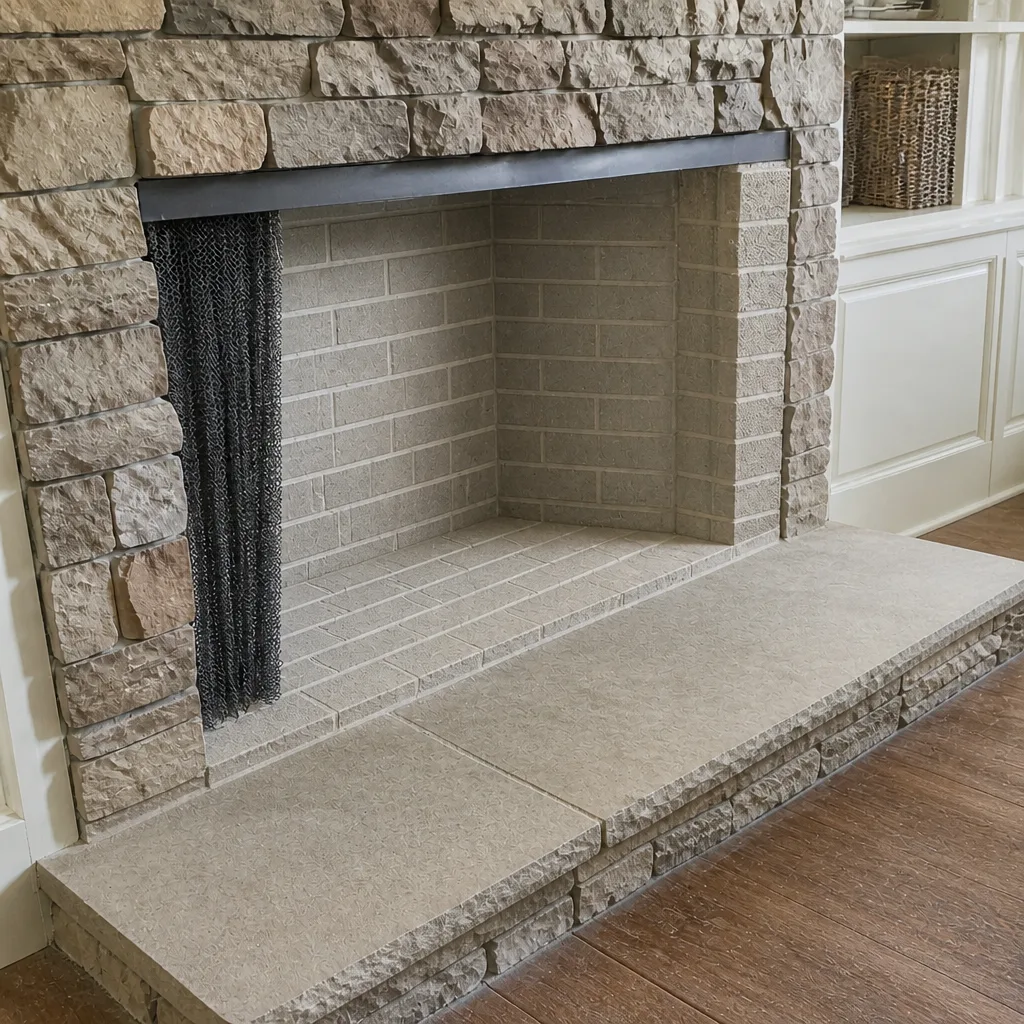
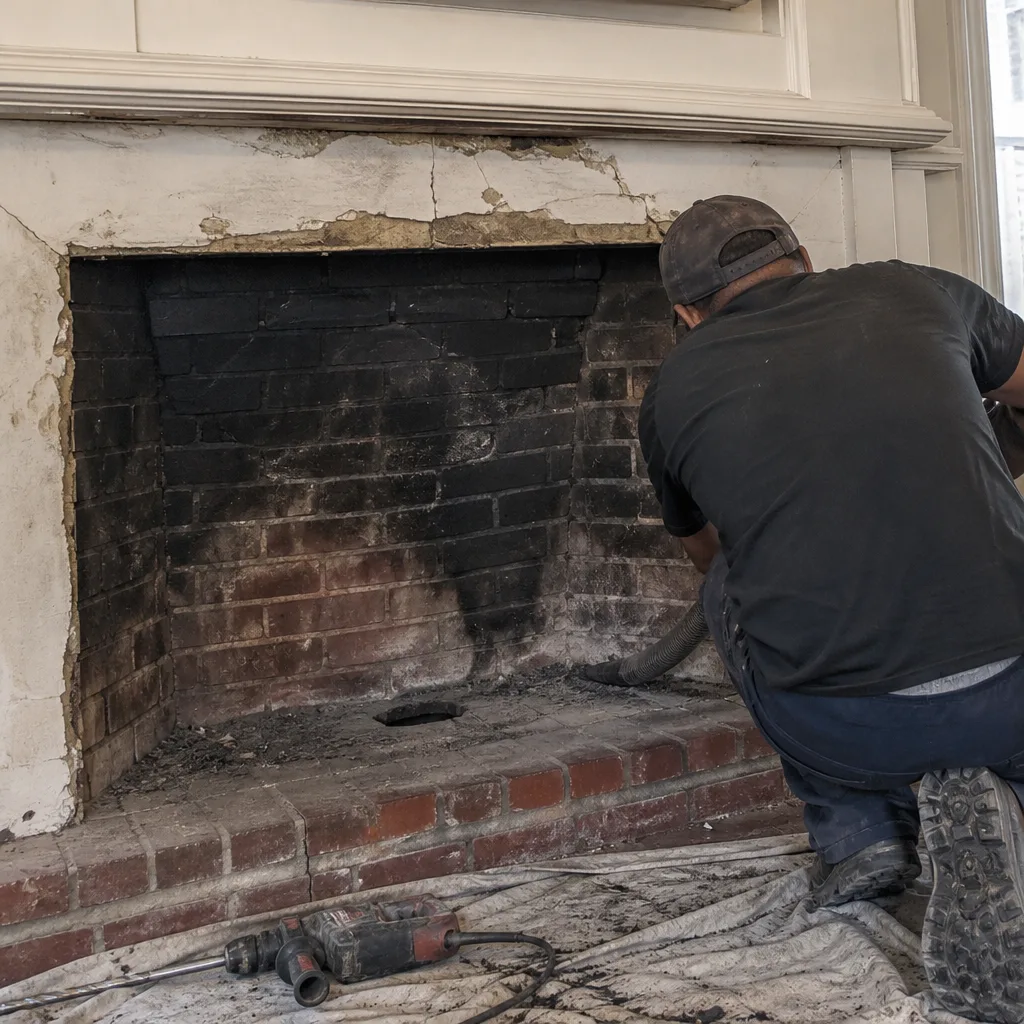
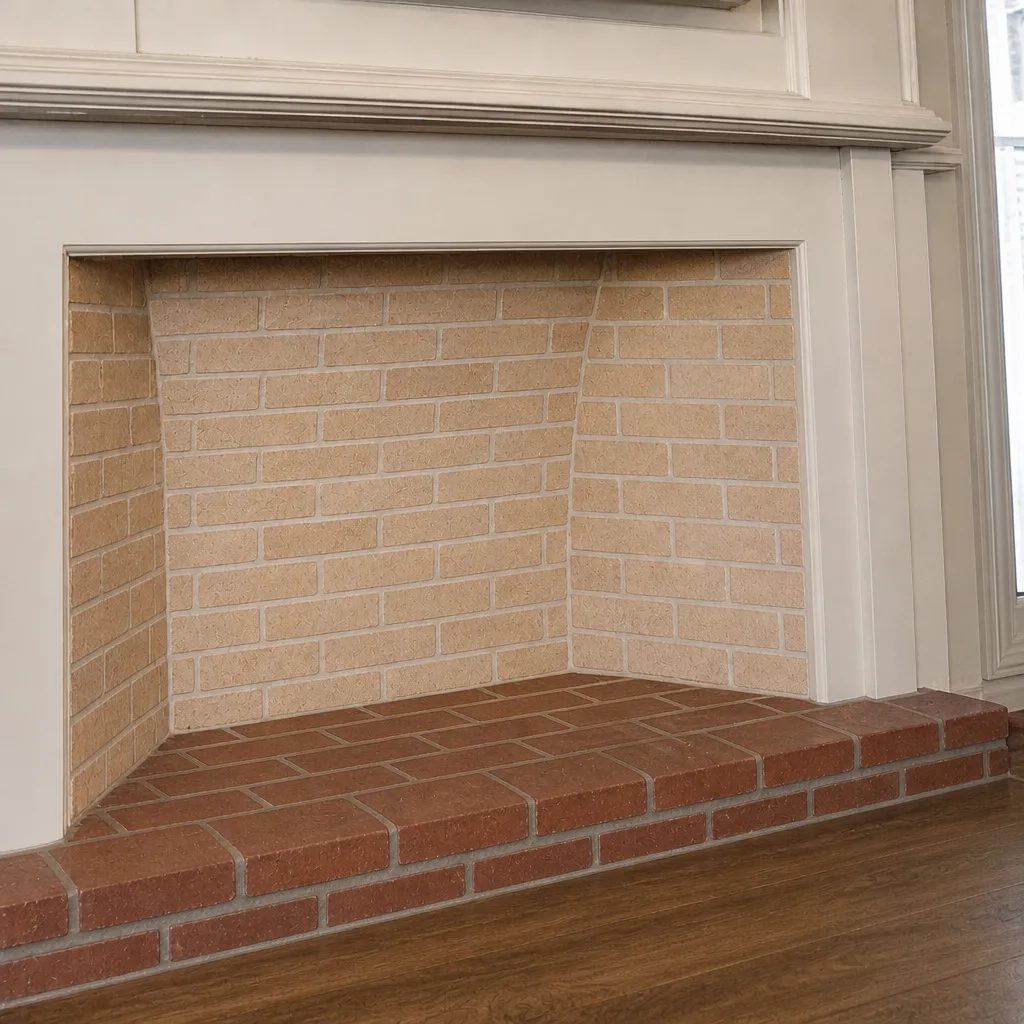
See the difference
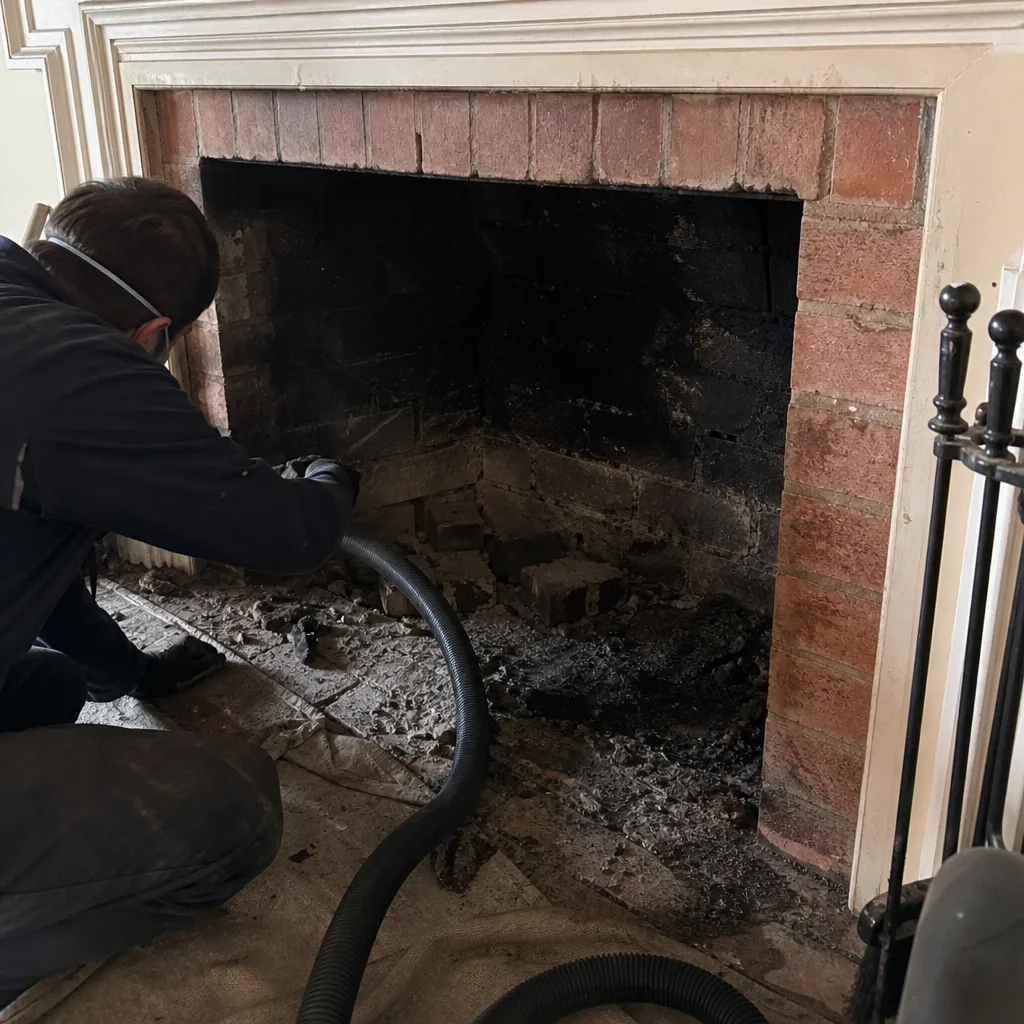 Before
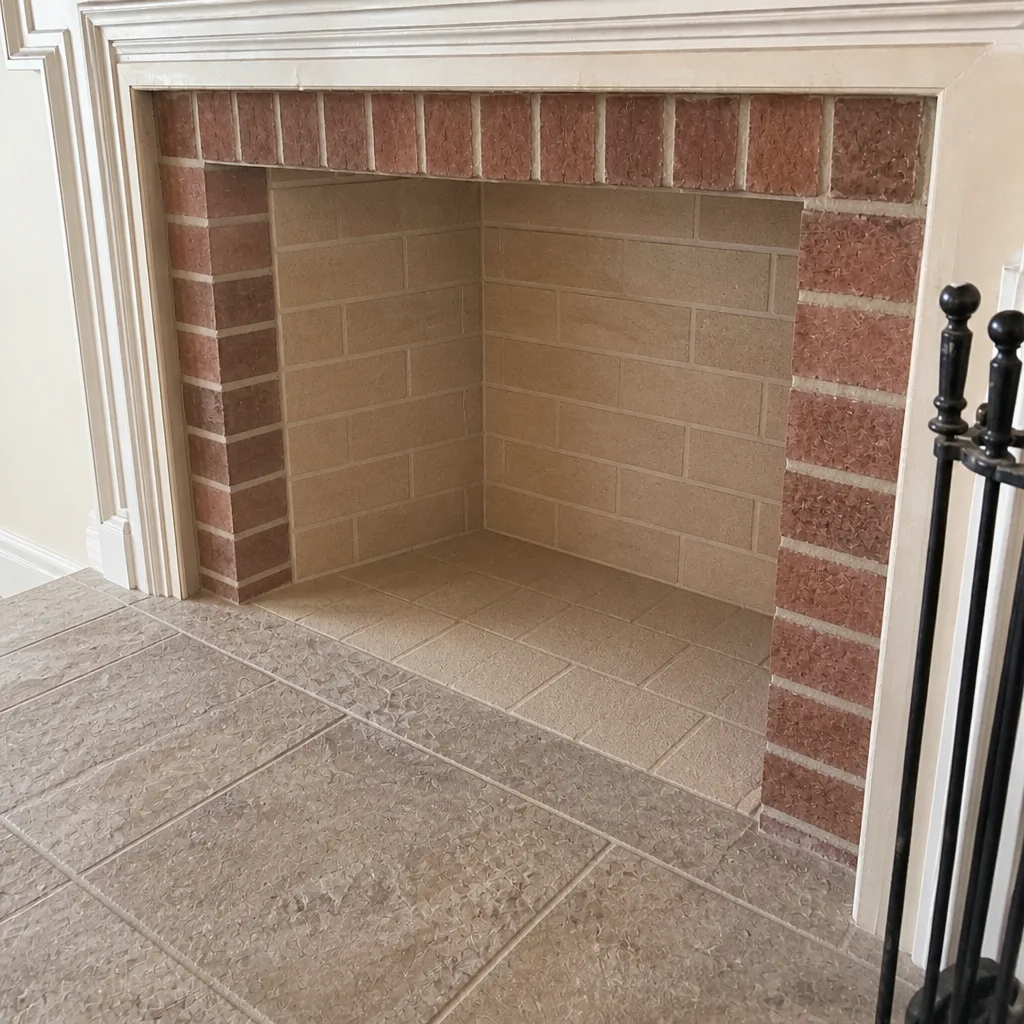 After
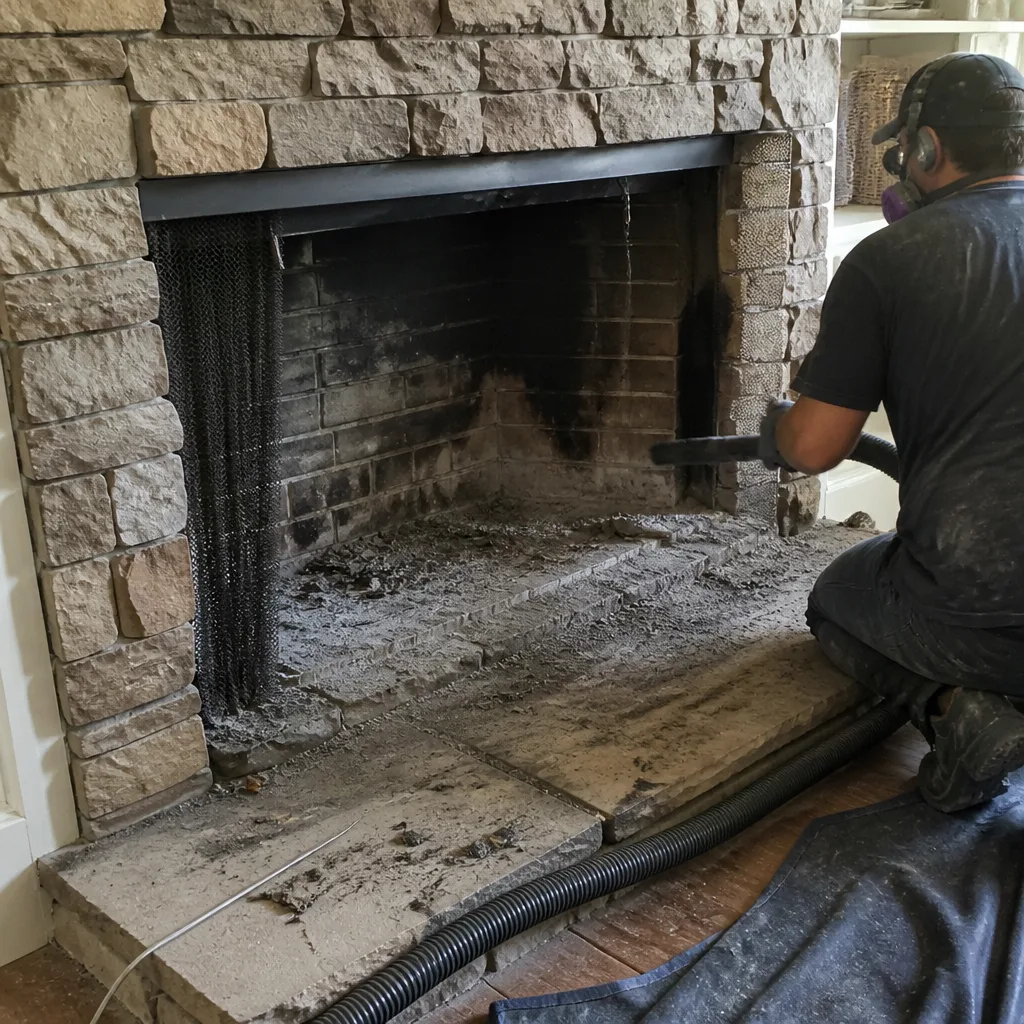 Before
 After
 Before
 After
When to Call a Professional
Some signs are a fine reason to book a sweep at your next convenience. Others are a reason to stop using the fireplace and call now. Rust, water stains inside the firebox, glazed creosote with a sulfur or asphalt smell, spalling brick, a chimney that’s visibly leaning, smoke backing into the room, or animal activity in the flue all fall into the second group. If you’ve had the fireplace going heavily for a season or two without a check, you’re also overdue. If you recently bought a home in Ballantyne, an inspection is the sensible first step, since you don’t know the chimney’s history. Chimney Sweep Ballantyne offers free estimates in Ballantyne, and we’ll tell you plainly what’s a repair and what’s a watch item. Call (888) 495-1677. We answer 24/7. Fast dispatch from 7am to 7pm, Sunday through Friday.
Frequently Asked Questions
The earliest signs are usually white efflorescence on the exterior, a sandy look to the mortar joints, and a faint sulfur or tar smell when the fireplace isn’t in use. Rust inside the firebox and a fireplace that’s suddenly harder to light also show up early. Any of these is a good reason to book an inspection rather than wait for next season. Call (888) 495-1677 for an exact quote. Estimates are free.
The general rule is annually for a fireplace in regular use, and more often if you burn frequently or notice glaze, odor, or draft changes. A sweep without an inspection misses most of the warning signs in this guide, so ask for both in the same visit. In Ballantyne’s humid climate, the annual check also catches water damage before it reaches the liner. Call (888) 495-1677 for an exact quote. Estimates are free.
A routine sweep plus a basic inspection is typically the least expensive chimney service, and the price is set per job by a written estimate after we see the chimney. Repairs like repointing, crown work, or liner restoration are quoted separately, with the scope and brand named in writing. We don’t charge a service call or diagnostic fee, and you’ll see the price before any work begins. Call (888) 495-1677 for an exact quote. Estimates are free.
Not always. Sometimes a liner can be restored with HeatShield ceramic resurfacing instead of a full reliner, and sometimes the flue is in good enough shape that the right answer is a thorough sweep and a cap. The only way to know is a camera inspection, and you should be able to see the photos before deciding. We’ll tell you plainly when a reliner is the right call and when it can wait. Call (888) 495-1677 for an exact quote. Estimates are free.
Three things typically happen: water keeps entering and damages the masonry and liner, glazed creosote continues to accumulate, and an obstruction or draft issue goes undiagnosed. Water damage and glazed creosote are the two most common reasons a small repair turns into a rebuild or a reliner. Skipping a check doesn’t stop the process, it just decides that you’ll find out later and pay more. Call (888) 495-1677 for an exact quote. Estimates are free.
Often yes for sweeps, inspections, cap installations, and smaller repairs, when the scope is straightforward. Structural work and relining are scheduled around materials and weather, and we’ll tell you which one you’re looking at. Book online or by phone and we’ll find the right slot. Call (888) 495-1677 for an exact quote. Estimates are free.
The Bottom Line
The visible warning signs on a chimney are worth reading carefully, because each one points at a specific failure and a specific repair window. Efflorescence means water is traveling through the masonry. Glazed creosote looks and smells nothing like ordinary fireplace soot. Draft problems have four distinct causes, and a sudden change is the real clue. Mortar joints at stage two are the last affordable fix. Animals in the spring need removal, inspection, and a proper cap. Rust means water is reaching metal repeatedly and the source needs finding. None of these get cheaper with time, which is the whole point of a reference guide. If you’re in Ballantyne, the right move is an inspection with a camera and a photo report, so you can see the cause for yourself. Call (888) 495-1677. We answer 24/7. Fast dispatch from 7am to 7pm, Sunday through Friday.
Chimney Sweep Ballantyne handles Chimney Sweep Ballantyne work across the Ballantyne area, from routine cleaning to cap installation, and we’re glad to answer questions before you book. If you’d like a free estimate, call (888) 495-1677. We answer 24/7. Fast dispatch from 7am to 7pm, Sunday through Friday.
Written by the team at Chimney Sweep Ballantyne.