
Last updated November 22, 2026
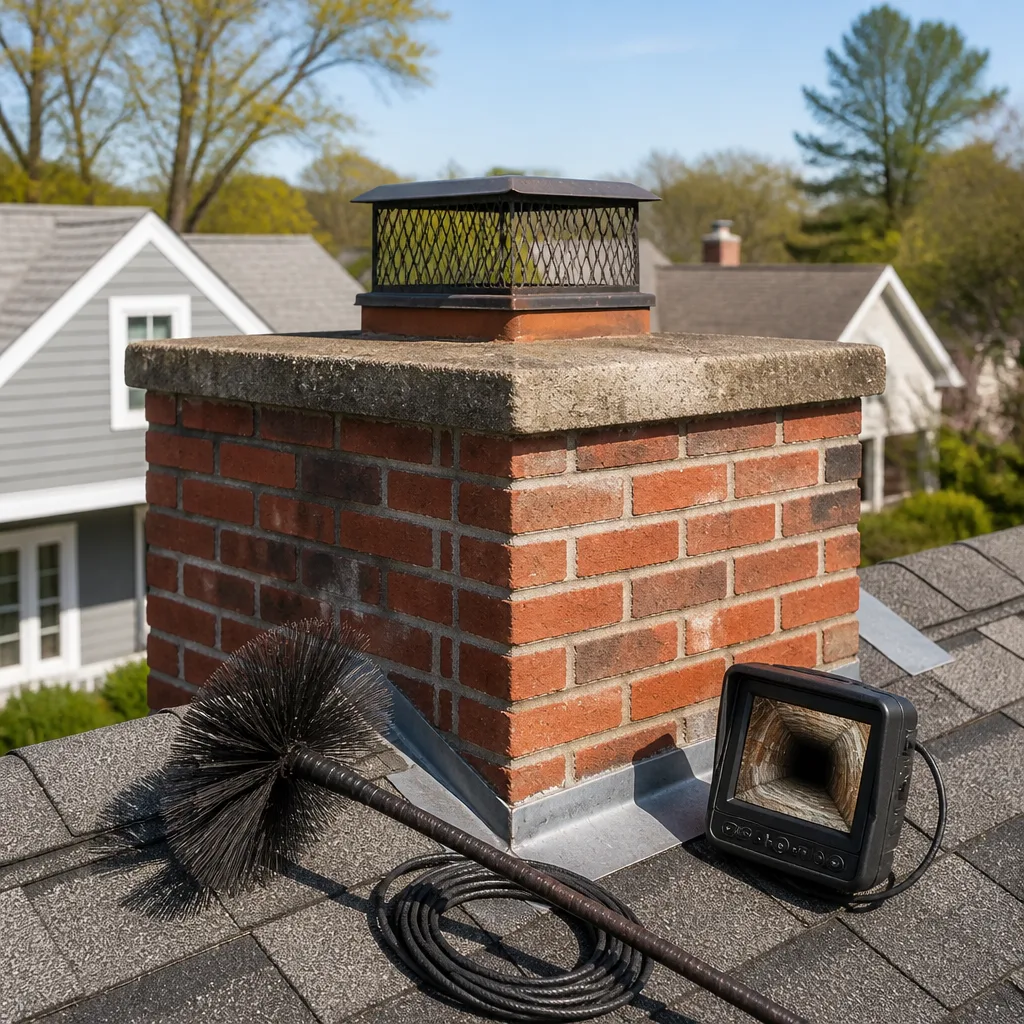 Sweep & inspection
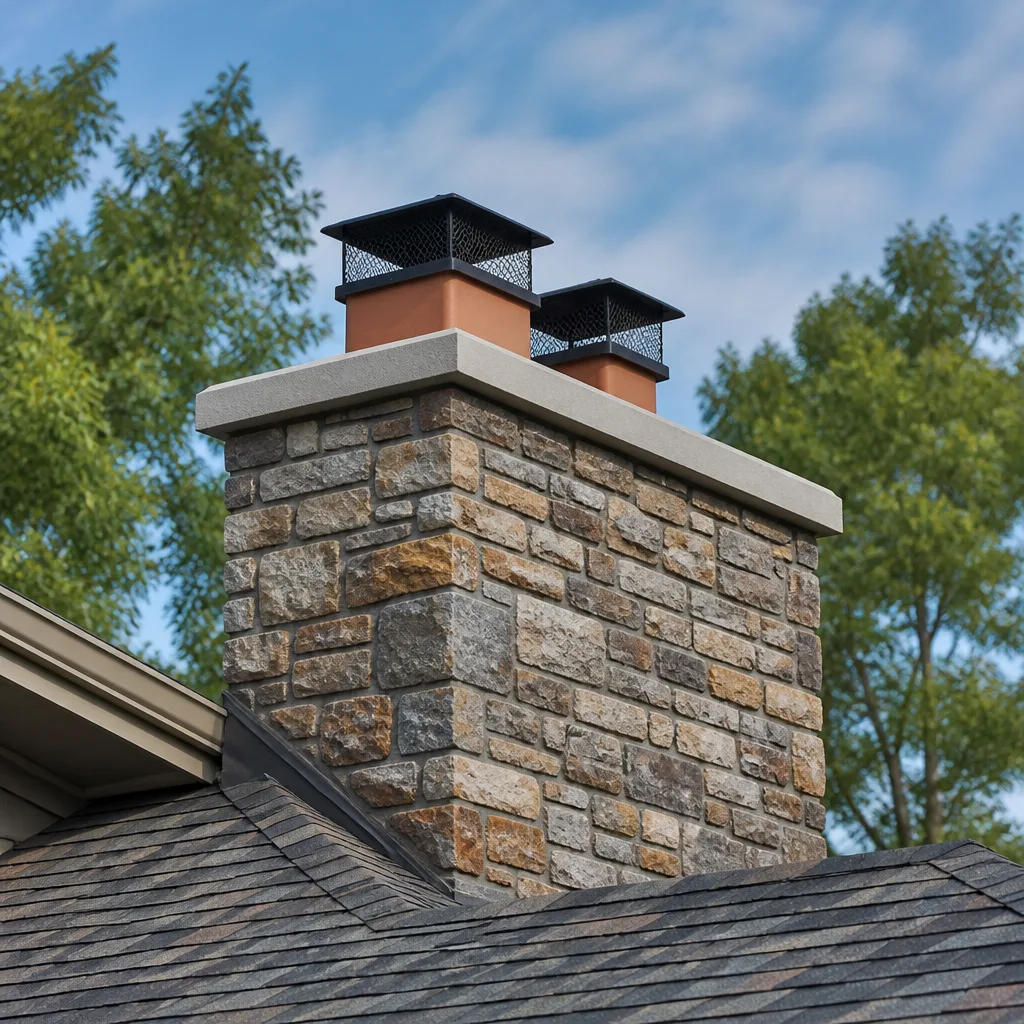 Caps & crowns
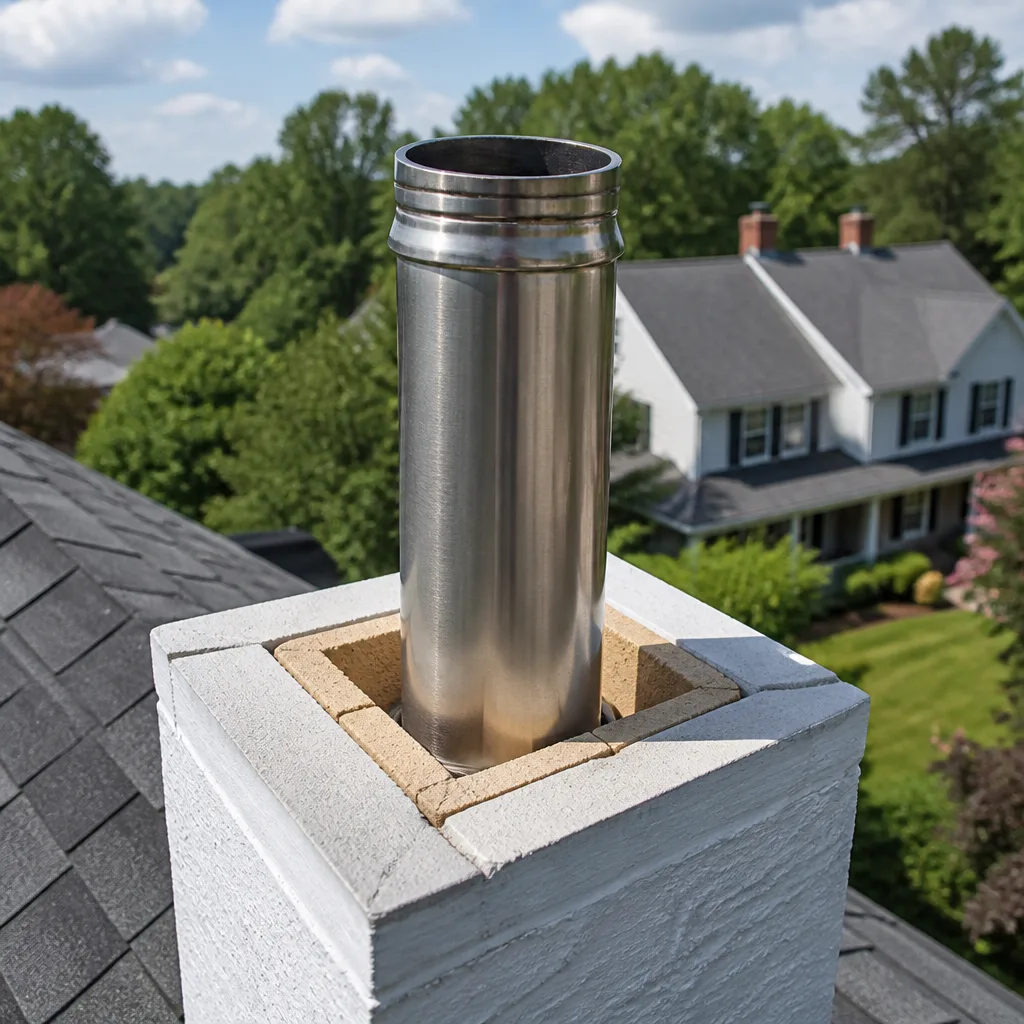 Flue relining
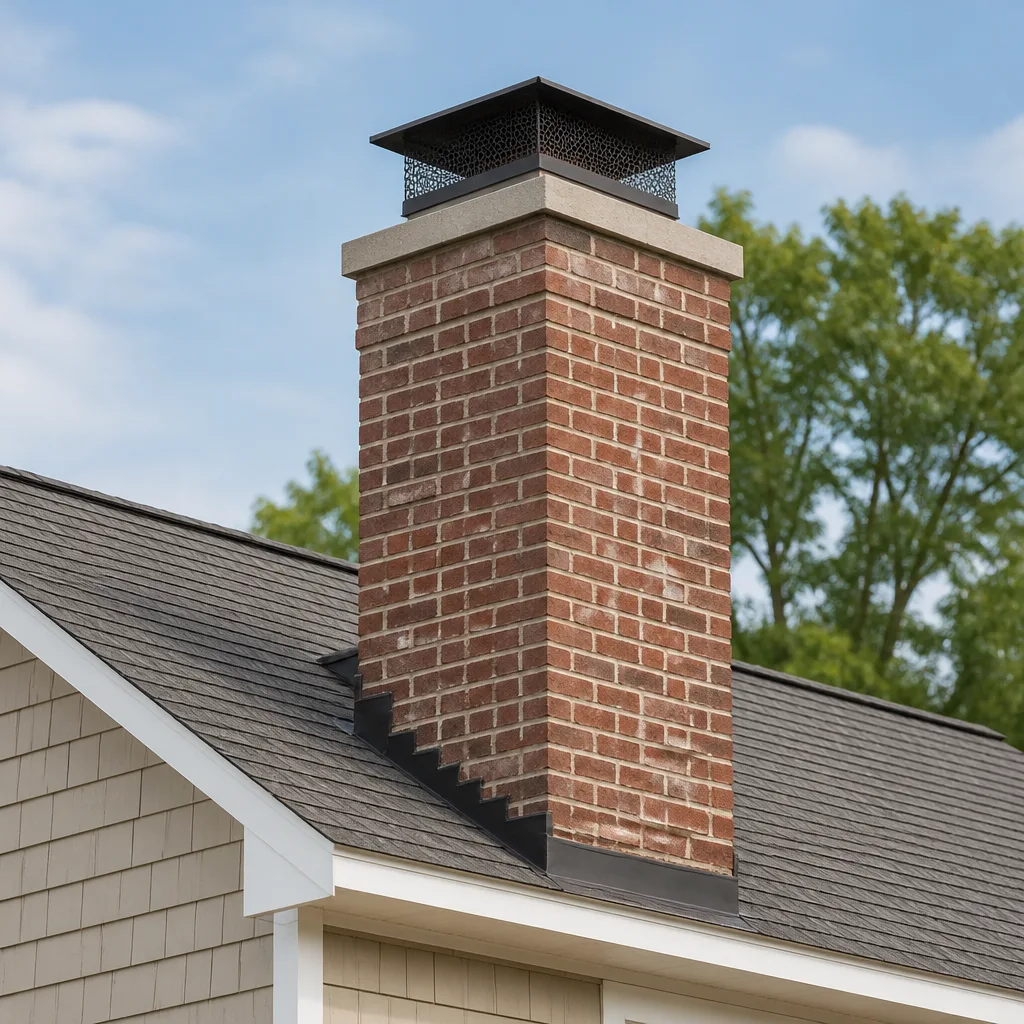 Masonry repair
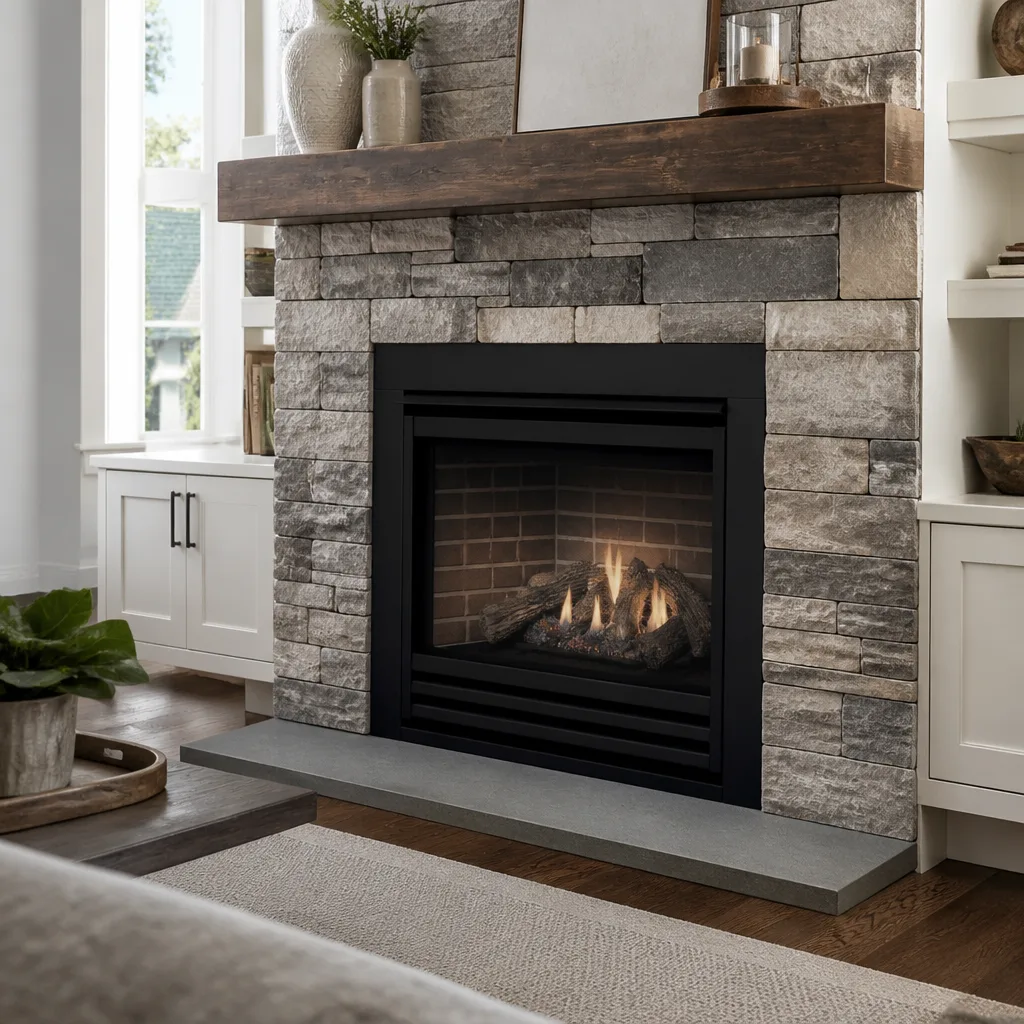 Gas fireplace service
Level 1 sweep and inspection to the NFPA 211 annual standard - flue, crown, cap, and flashing checked and photographed
Chimney sweep logs do not sweep chimneys. They loosen some creosote - which then falls where a brush and vacuum still have to collect it.
DIY vs Professional Chimney Cleaning: The Ballantyne Homeowner’s Decision Guide
A chimney brush kit and a Sunday afternoon can clean a flue. That part is true. What a brush kit cannot do is tell you whether the flue is structurally sound enough to keep using, and for most Ballantyne homes with fireplaces that have been in service 15 years or longer, that’s the more important question. The cleaning is the easy half. The inspection that comes with it is the half that keeps you out of trouble. This guide lays out exactly which chimney tasks a homeowner can safely handle, which ones need professional tools, and why Ballantyne’s housing stock and burning patterns push most people outside the DIY window. You’ll also get a realistic cost-versus-risk picture you can use to decide for your own home.
Quick Answer
DIY chimney cleaning is reasonable only if your flue is confirmed sound, has light stage 1 creosote, and has been inspected by a professional within the last year. For most Ballantyne homes, especially those with fireplaces over 15 years old or a history of heavy burning, professional cleaning is the safer choice because consumer brush kits can’t detect cracked flue tiles, offset flue geometry, or the hardened stage 2 and 3 creosote that requires rotary equipment and chemical treatment to remove. A professional sweep also gives you documentation that matters if you ever file a homeowners insurance claim.
Styles & brands we work with
- Sweep & inspection
- Caps & crowns
- Flue relining
- Masonry repair
- Gas fireplace service
Table of Contents
- What You Can Safely Do Yourself
- Why Brush Kits Miss Stage 2 and 3 Creosote
- What Professional-Grade Equipment Actually Does
- Why Ballantyne Housing Stock Changes the Calculus
- The Liability Question: DIY Cleaning and Your Insurance Claim
- The Realistic Cost-versus-Risk Calculation
- A Step-by-Step Decision Framework
- Common Mistakes to Avoid
What You Can Safely Do Yourself
There are a handful of chimney-adjacent tasks that a careful homeowner can and should handle without a professional. These are visual checks, not cleanings, and they don’t require going onto the roof if you aren’t comfortable with heights. Here’s what falls inside the safe window:
- Cap check from the ground. With binoculars from your yard, look at the chimney cap. Is it still attached? Are the mesh screens intact? Is there visible rust-through or impact damage from a fallen branch? Note anything that looks loose.
- Damper inspection from inside. Open the damper and look up. It should open and close smoothly. A damper that sticks or won’t fully close is worth flagging for a professional.
- Firebox visual. Look for cracked firebrick, crumbling mortar joints, or gaps between bricks. Any of those change how the fireplace should be used until they’re checked.
- Crown and flashing visual from the ground. The concrete crown at the top of the chimney should slope away from the flue. If you see a crack running through it, or visible gaps where the flashing meets the roof, those are professional follow-ups.
- Creosote glance. When the firebox is cold and the damper is open, a flashlight pointed up into the smoke chamber shows you the flue surface. You can see heavy buildup, but you can’t measure it accurately or tell what stage it is.
None of these tasks involve a brush, a ladder, or chemical cleaners. They’re the “notice and report” layer. The chimney sweep is only as good as the inspection that comes with it, and these checks give you a starting list for that inspection. In Ballantyne, where many homes were built with fireplaces as a design feature rather than a primary heat source, a lot of fireplaces get used heavily in a few weeks and then sit dormant for months – and that pattern produces specific creosote behaviors that a visual check will flag but won’t diagnose. If you want a professional eye on it, our Chimney Sweep Ballantyne page explains the full inspection scope.
Why Brush Kits Miss Stage 2 and 3 Creosote
Creosote forms in three stages, and the difference between them determines whether a consumer brush will do anything at all. Stage 1 is soot and light flaky deposits, the stuff you can sweep off with a stiff brush. Stage 2 is a denser, sometimes glossy or crusty layer that bonds to the flue wall. Stage 3 is glazed, hardened, and essentially baked on. A consumer-grade poly brush, even a good one, cannot remove stage 2 or stage 3 creosote – the spring in a brush kit doesn’t have the rigidity or the rotational torque to bite into the crust, and no amount of extra effort changes that.
Removing stage 2 requires rotary agitation with the right head on a powered rod system. Removing stage 3 typically requires chemical treatment first – the glaze has to be broken down before any mechanical tool can reach the flue wall behind it. This is not a marketing claim; it’s a function of how the deposits bond to masonry versus how much force a hand brush can generate. When a DIY attempt hits a stage 2 layer, what usually happens is the loose top flakes come free, the layer underneath stays put, and the homeowner concludes the flue is clean.
Ballantyne’s burn pattern makes this more likely than you might expect. Regional fireplaces often run hard in December and January with a mix of seasoned and semi-seasoned wood, then sit idle. Cool flue temperatures during slow burns produce more condensation, which drives denser creosote. When we sweep Ballantyne chimneys, stage 2 layers are common on fireplaces that have gone two or more seasons without a cleaning. A professional rotary system in the right hands is what breaks down those layers – see our chimney sweep service page for how we approach it.
What Professional-Grade Equipment Actually Does
The tools a professional chimney sweep uses aren’t just heavier versions of what’s on the hardware store shelf. They do specific jobs that a consumer kit cannot replicate. Here’s what’s in play on a typical professional visit:
- Rotary rod systems with interchangeable heads. A powered rod turns a poly or wire head at torque a hand brush can’t generate. The head selection matches the creosote stage – a wire whip for stage 2 crust, a chain head for glazed deposits, a poly head for a flue that’s already clean enough for standard brushing.
- Camera scopes. A chimney camera goes up the flue and shows you what the inside actually looks like – cracked tiles, gaps in the mortar, offset geometry, hidden creosote behind a bend. You see the photo report yourself. This is the single biggest difference between a professional sweep and any DIY attempt.
- HEPA containment with a triple-filter vacuum. A high-efficiency vacuum hooked to the firebox creates negative pressure that pulls airborne soot and dust out instead of into your living room. No brush kit gives you that, and if the brush does dislodge a lot of creosote, the soot plume becomes the problem.
- Chemical treatment products. For stage 3 glaze, professional-grade chemical treatments loosen the deposit before mechanical removal. Consumer products exist but aren’t formulated for full-flue application.
- Liner-grade components. When a cleaning uncovers a liner problem, having the right parts on hand matters. We install DuraFlex flexible stainless liners for offset or older flues, HeatShield for ceramic liner resurfacing, and Gelco and Famco for cap and crown work – the same materials certified chimney specialists use nationally, not big-box substitutes.
In Ballantyne, older flues with an offset – the jog many fireplaces have between the firebox and the exterior chimney stack – are a common reason rigid equipment fails and flexible systems succeed. The chimney cap & crown work is often where a cleaning visit turns into a repair, because that’s the first time anyone has actually looked at the chimney from every angle.
Why Ballantyne Housing Stock Changes the Calculus
Ballantyne’s housing stock skews toward homes built from the 1990s through the 2010s, with a meaningful share of older properties in the surrounding neighborhoods. That age range matters for a reason that’s easy to miss: fireplaces from that era were built to the code of their day, and 15 or 20 years of seasonal burning on the same flue is enough time for hairline cracks in clay tiles, mortar joint erosion, and slow crown deterioration. None of those problems are visible from the firebox with a flashlight. All of them are visible with a camera scope.
There’s also the usage pattern. Ballantyne winters are cool enough to justify regular fires but not cold enough to force them – so a lot of homes alternate between heavy use during a cold snap and long dormant stretches. That cycling, more than steady use, produces the moisture swings that accelerate creosote densification and masonry wear. Homes in this area with a fire pit outside and a fireplace inside often burn a mix of wood types, and the moisture content of that wood drives what stage of creosote you end up with. A DIY cleaning can’t see any of that context.
The other Ballantyne-specific factor is home value. When a chimney fire or carbon monoxide problem damages a home in this market, the repair cost is measured against a property value where full chimney rebuilds and interior smoke remediation are significant line items. That changes the risk math. A professional cleaning and inspection is a small expense against a structure whose replacement cost makes “I think it’s probably fine” a poor bet. The fireplace is a system – flue, liner, cap, crown, firebox – and Ballantyne homes benefit from treating it as one.
The Liability Question: DIY Cleaning and Your Insurance Claim
Here’s the part almost no DIY guide covers. If a chimney fire happens after a homeowner has been cleaning the flue themselves, the insurance claim process can go sideways in ways that have nothing to do with fault. Most homeowners policies cover fire damage, but the adjuster is going to ask what maintenance was performed and by whom. A DIY homeowner has no professional documentation to show, which can lengthen the claim, invite a negligence argument from the insurer, and in some cases become a coverage dispute.
A professional cleaning and inspection produces a written record. The sweep date, the level of inspection performed, the camera photos, and any recommended repair – all of it exists on paper. If a chimney fire happens six months later despite a clean flue, that documentation supports the claim rather than undermining it. If a problem was identified and the homeowner chose to defer it, that’s a different story, but at least the record is honest.
This isn’t a scare tactic. It’s a straightforward reading of how claims work. Ballantyne homeowners who carry standard policies on higher-value properties have more at stake in a dispute than the cost of a professional sweep. If you’re weighing DIY against professional in Ballantyne, the insurance angle deserves its own column in the calculation, not a footnote. For homes where structural work is on the table, a proper inspection from a company that handles both cleaning and repair is what makes the documentation useful – our fireplace repair page covers how we scope that.
The Realistic Cost-versus-Risk Calculation
A hardware store chimney brush kit runs a modest amount of money, and the cleaning takes a Saturday and some effort. That’s the DIY cost side. The risk side is what a DIY attempt leaves behind: a flue that looks clean but has stage 2 creosote still on the wall, a cracked tile that only shows up on camera, or a cap that’s loose and about to let water in. The realistic question is how often a DIY attempt uncovers a problem that then requires a professional visit anyway.
In our experience, a significant share of the professional cleanings we do in Ballantyne follow a homeowner’s own attempt, and what prompts the call is usually one of three things: the brush did nothing to the buildup, the smoke didn’t draw as well as it used to, or the homeowner got a good look up the flue and saw something they didn’t like. When we arrive, we often find that the DIY attempt removed only the loose stage 1 material and left the real work in place. That’s not a knock on the homeowner – it’s what a consumer brush does.
Against a professional cleaning, the fair way to think about it is value, not price. A professional sweep includes camera inspection and a photo report, so the cost covers the cleaning and the diagnostic in one visit. When the sweep turns up a liner issue, having HeatShield ceramic liner resurfacing on the table can extend flue life without the cost or disruption of a full reliner. When the issue is in the cap or crown, Gelco and Famco components are what we install for matched fit and weatherproofing. The written estimate sets the final price, and the estimate is free – so the decision framework becomes: can your DIY attempt replace the cleaning and the diagnosis? For most homes over 15 years old, the answer is no.
A Step-by-Step Decision Framework
Use this sequence to decide for your own Ballantyne home. Work through it in order – each step narrows whether DIY is safe for your situation.
- Has the flue been professionally inspected in the last 12 months? If no, that’s your first call. No DIY cleaning should happen on an uninspected flue. A video scope is the only way to know what the flue wall actually looks like.
- Is the firebox and flue in a home built before roughly 2010? If yes, expect clay tile cracks, mortar erosion, or an offset flue. Any of those rules out DIY until a professional confirms the flue is sound.
- How heavy has the burning been the last two seasons? More than a cord of wood per season, or regular use of unseasoned wood, points toward stage 2 creosote deposits that a brush kit won’t remove.
- What can you see with a flashlight up the flue? Light, flaky soot is stage 1 and might yield to a brush. Glossy or crusty surfaces are stage 2 or 3 and require rotary and chemical methods.
- Have you ever had a chimney fire, even a small one? Any prior fire event means the flue needs professional evaluation before it’s used again, no exceptions.
- Does your insurance carrier know you clean your own flue? If you’re relying on coverage after a fire, the documentation matters. A professional record supports a claim; a DIY record can complicate one.
- If the answer to any of steps 1-5 is uncertain, book a professional sweep and inspection. The written estimate is free, and the visit produces the camera report you need to make the rest of the decisions.
For Ballantyne homes that pass all seven steps cleanly – recent inspection, modern flue, light use, stage 1 only, no prior fires, documented maintenance – a homeowner brush between professional visits is defensible. Every other combination points to a professional visit. If you want to talk through your specific scenario, call (888) 495-1677. We answer 24/7. Fast dispatch from 7am to 7pm, Sunday through Friday.
Common Mistakes to Avoid
- Assuming a clean firebox means a clean flue. Soot in the firebox tells you nothing about the creosote layer higher up. The flue is where the fire risk lives, and it’s three to six feet above where most DIY eyes actually look.
- Using a poly brush on a masonry flue with stage 2 deposits. The brush will flake off the surface and leave the crust behind. In Ballantyne, where burning tends toward dense cool-weather fires, that crust is more common than a quick brush down will address.
- Skipping the cap and crown check. In Ballantyne’s summer storms and winter freezes, the crown takes the worst of the weather. A hairline crack in the crown lets water into the masonry, and water plus freeze-thaw is what turns a small repair into a liner or rebuild issue.
- Cleaning without a camera scope. The single biggest blind spot in a DIY cleaning is the interior of the flue. A cheap scope exists, but interpreting what you see in a masonry flue takes experience – cracks and offset geometry look like nothing until you’ve seen what a real problem looks like.
- Burning unseasoned wood to “get through” the season. Wet wood produces cooler flue temperatures and more condensation, which drives creosote densification faster. It’s the most common self-inflicted cause of stage 2 buildup we see in Ballantyne.
- Ignoring the damper and smoke shelf. A stuck damper or a soot-packed smoke shelf degrades draft, which affects burn quality and pushes more creosote onto the flue wall over time. Neither is a DIY fix if you aren’t sure what you’re looking at.
- Treating the whole chimney as one part. Cap, crown, flue, liner, firebox, damper – each has its own failure mode. A single-problem fix that misses the rest is how small issues compound in Ballantyne homes that sit dormant for long stretches.
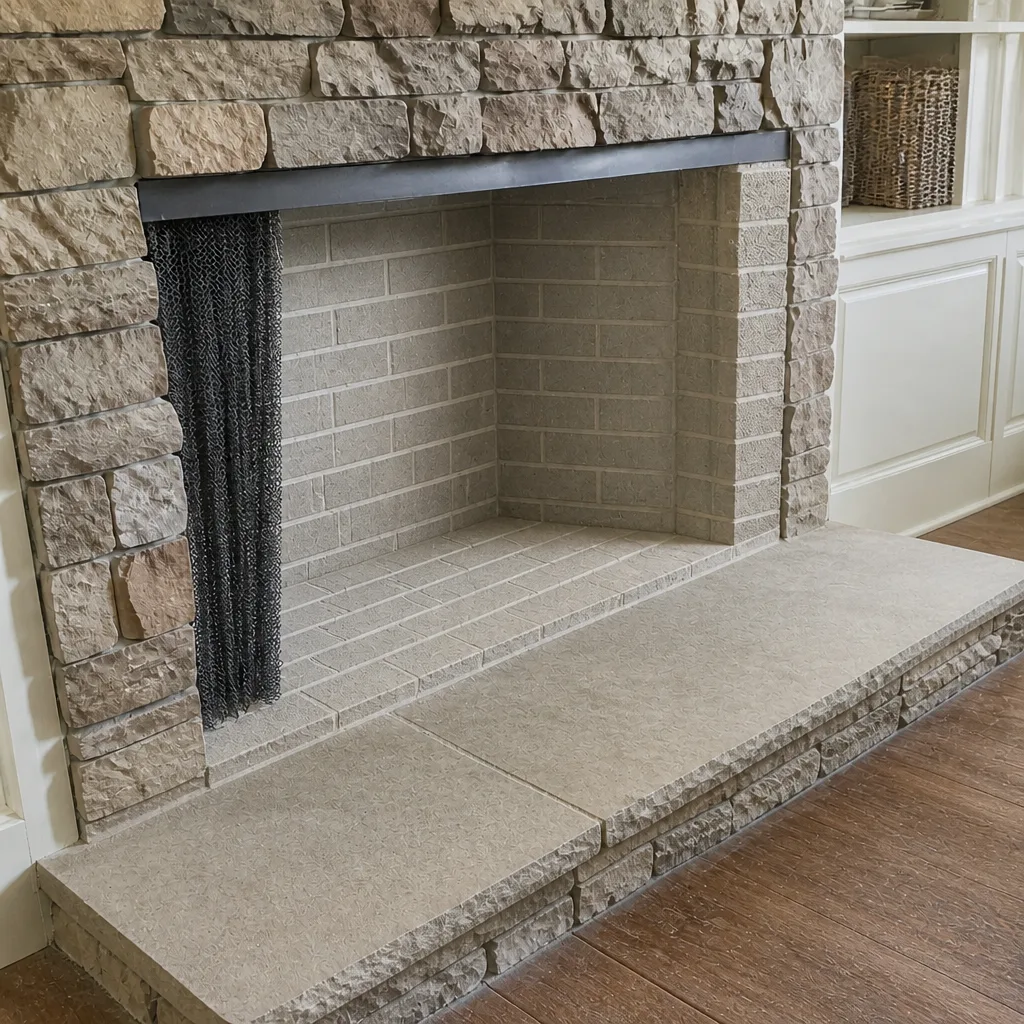
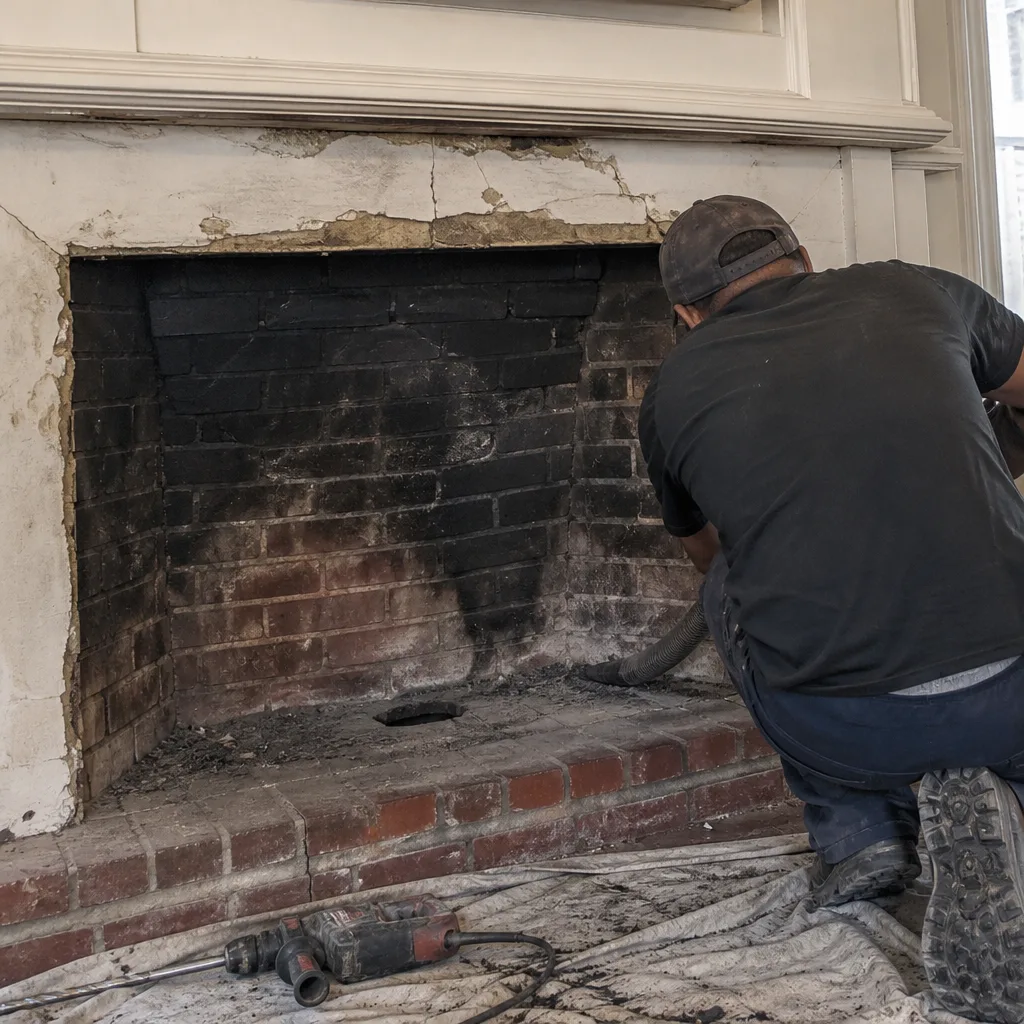
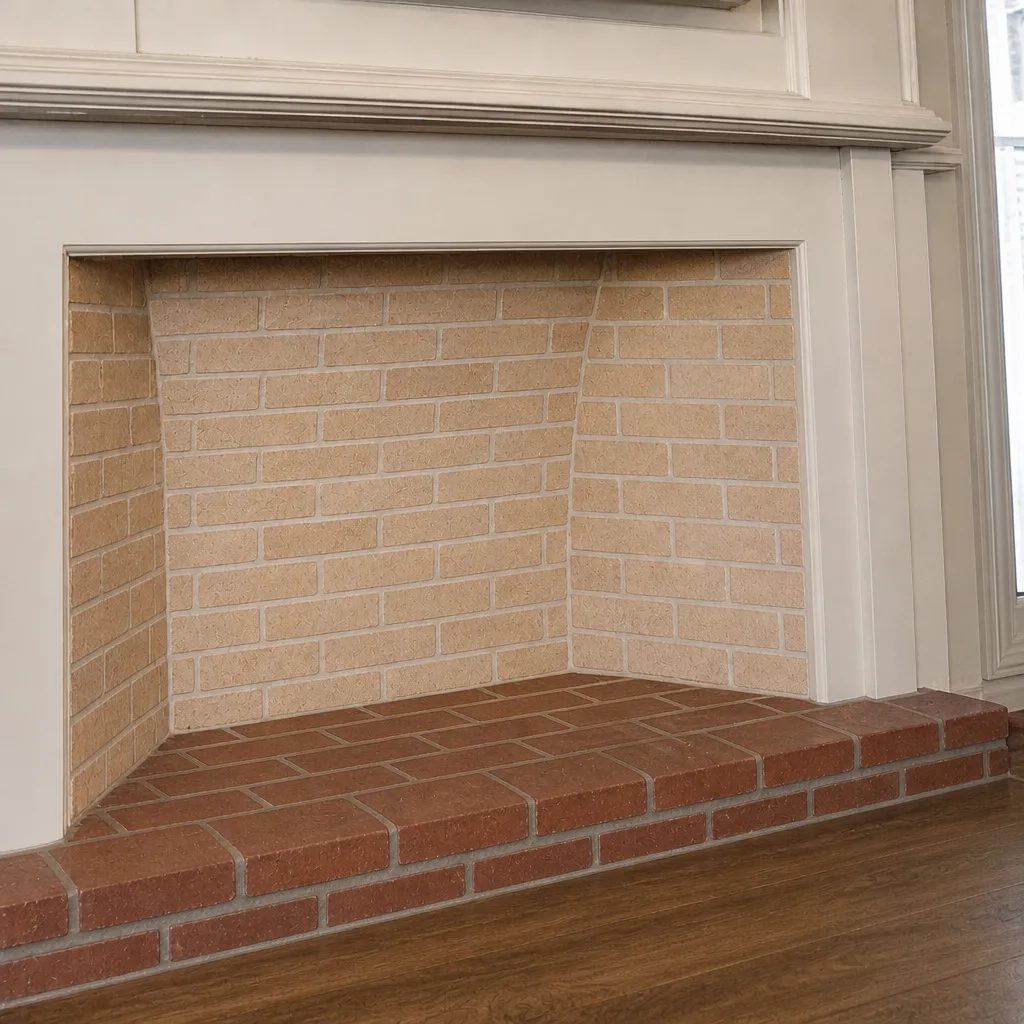
See the difference
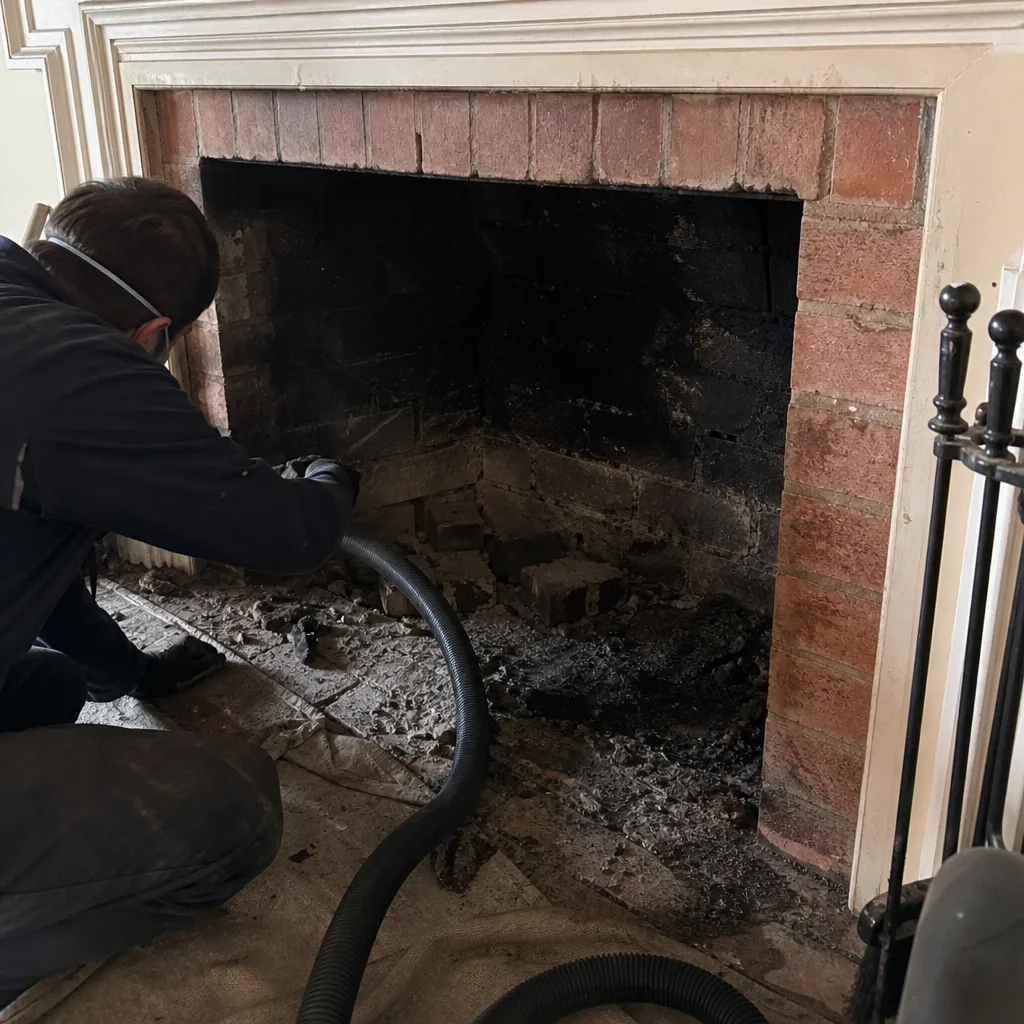 Before
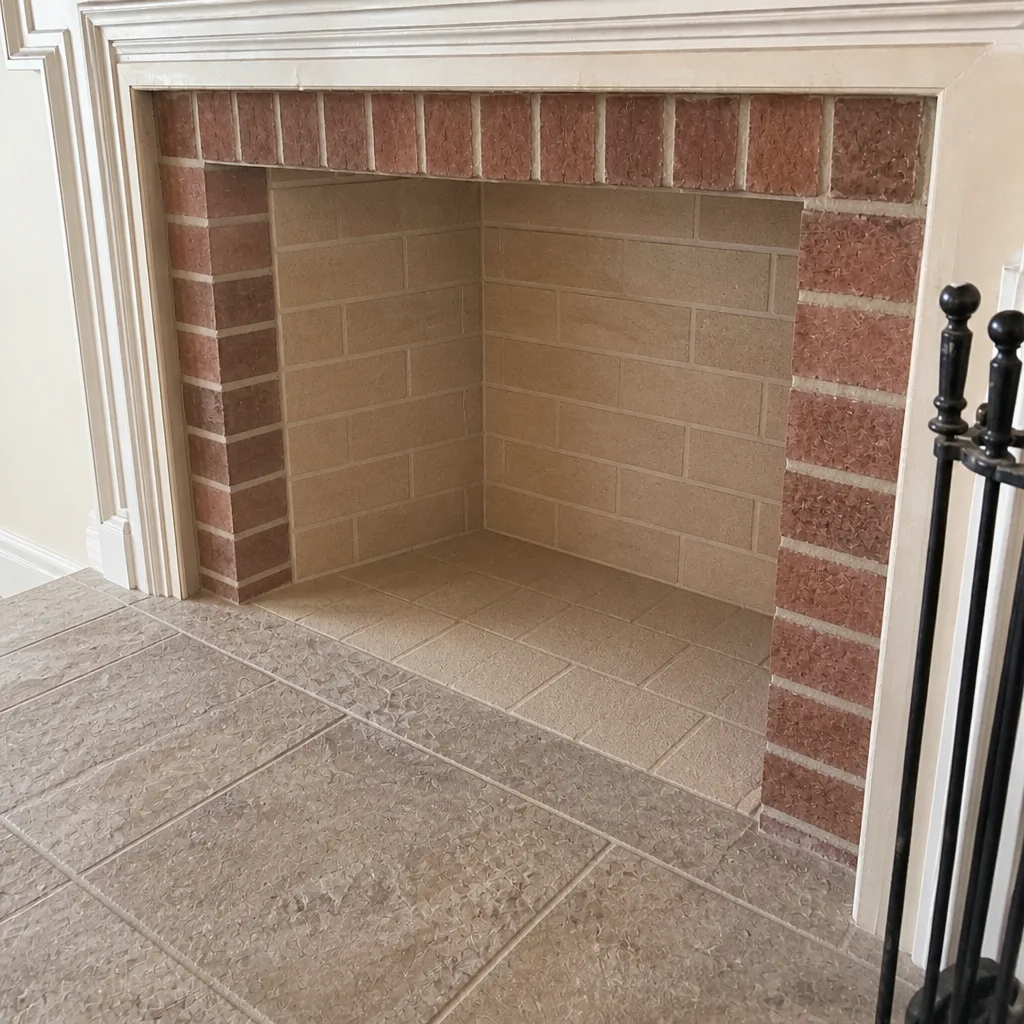 After
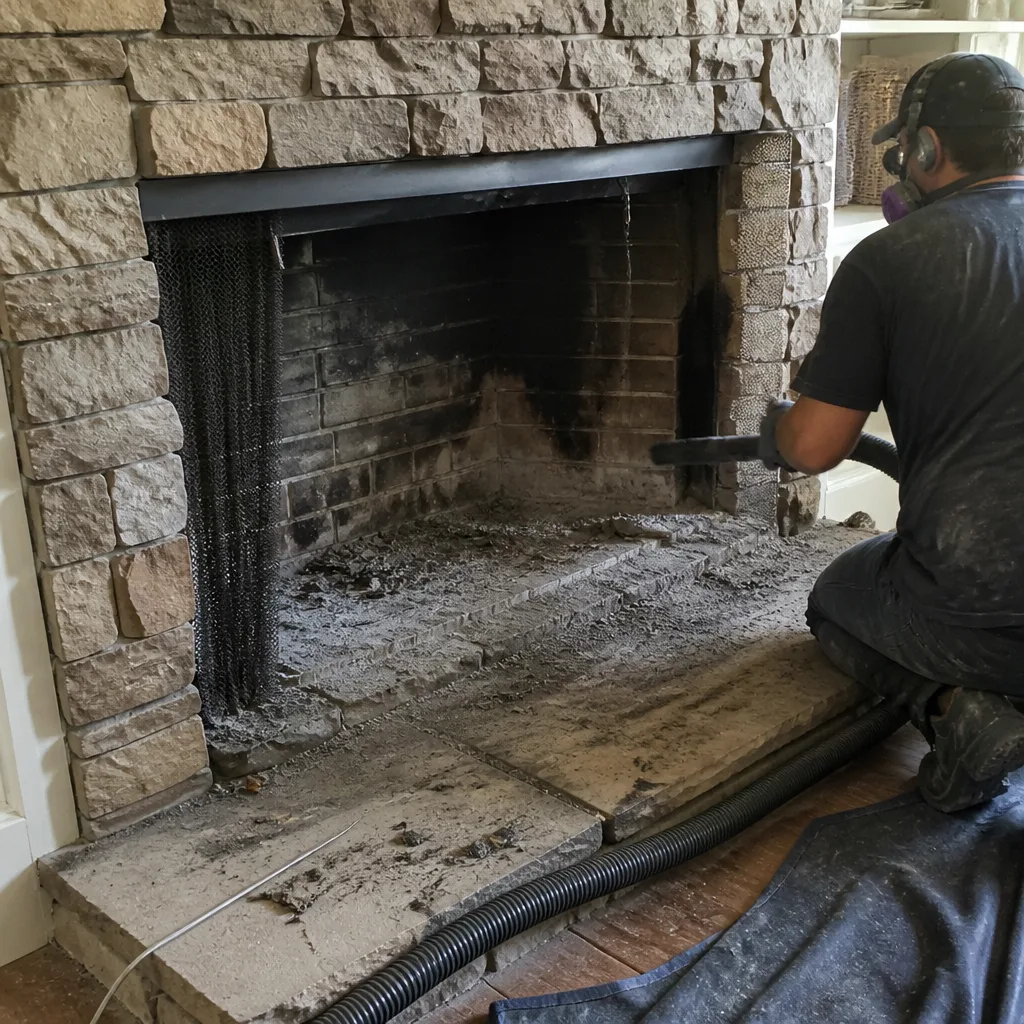 Before
 After
 Before
 After
When to Call a Professional
Call a professional chimney sweep when any of these are true: it’s been more than a year since your last inspection, your home is 15 years or older with its original flue, you’ve had a chimney fire of any size, you smell creosote or see black soot around the firebox, the fireplace smokes into the room when you use it, you burn more than a cord of wood a season, or you plan to file or rely on a homeowners insurance claim after any chimney event. Also call if a DIY cleaning revealed glossy or crusty deposits, cracked tiles, or loose cap and crown components. Chimney Sweep Ballantyne offers free estimates in Ballantyne – call (888) 495-1677. Our technicians have up to 13 years of experience, and we perform all chimney and fireplace work in-house: sweeping, Level I, II, and III inspections, cap and crown work, liner repair and resurfacing, and fireplace repair, with no subcontracting for different scopes. We answer 24/7. Fast dispatch from 7am to 7pm, Sunday through Friday.
Frequently Asked Questions
You can clean your own chimney only if the flue has been professionally inspected within the last year, is confirmed structurally sound, and shows only stage 1 light soot deposits. Most Ballantyne homes with fireplaces over 15 years old don’t meet those conditions, because stage 2 creosote and hidden flue tile damage are common enough that a consumer brush kit leaves real work undone. If you’re not sure which situation you’re in, that uncertainty itself is the reason to book a professional sweep. Call (888) 495-1677 for a free estimate.
A professional chimney sweep in the Ballantyne area typically costs a modest flat rate that covers the cleaning, a camera inspection, and a photo report, with the written estimate setting the final price. DIY kits cost less up front but don’t include the diagnostic that actually prevents chimney fires and liner damage. Estimates from us are free and the price is set per job, not by the hour. Call (888) 495-1677 for an exact quote – estimates are free.
Not necessarily, and no honest sweep will tell you otherwise without camera evidence. A liner is recommended only when a scope shows cracked tiles, gaps in the mortar, or a flue that no longer meets the clearance requirements for the appliance it serves. HeatShield ceramic liner resurfacing can extend liner life in some cases without full replacement, and DuraFlex flexible stainless systems solve offset flue configurations that rigid liners can’t reach. You should be able to see the photo report yourself before agreeing to any repair. Call (888) 495-1677 for a free estimate.
A chimney should be swept once a year when it’s in regular use, and more often if you burn heavily, burn unseasoned wood, or use a wood stove as a primary heat source. An annual sweep in Ballantyne also functions as a yearly inspection, which is where most chimney problems get caught early. Skipping a year doesn’t mean an immediate hazard, but it does mean the creosote layer has had twelve more months to densify. Call (888) 495-1677 to book a sweep – estimates are free.
Skipping a cleaning lets creosote build to a stage that will eventually ignite, produces a flue fire that can crack tiles and spread to the framing, and it also reduces draft efficiency so the fireplace performs worse the longer you wait. The other risk is carbon monoxide from a blocked or compromised flue – it has no smell and no color, which is why an annual inspection matters more than most homeowners realize. None of this is a scare tactic; it’s the normal progression when maintenance slips. Call (888) 495-1677 for a free estimate and a camera report you can see yourself.
A DIY chimney brush is worth owning only if your flue has been professionally confirmed as sound and lightly sooted, and if you understand that a brush between annual sweeps does not replace a professional inspection. For most Ballantyne homeowners, the money is better spent on a professional sweep that includes camera inspection and a written photo report, which is documentation you can’t get from a brush kit. If you’re unsure which side of that line you’re on, call (888) 495-1677 – the estimate is free.
The Bottom Line
DIY chimney cleaning is a real option for a narrow slice of Ballantyne homes: recently inspected flues, light stage 1 creosote, modern construction, and documented maintenance. For most of the rest – especially homes with fireplaces 15 years and older, heavy seasonal burning, or any history of a chimney fire – professional cleaning is the correct choice, because a consumer brush cannot remove stage 2 or 3 creosote, cannot scope the flue for hidden damage, and cannot produce the documentation that supports a homeowners insurance claim. The cost difference is smaller than the risk difference. Decisions you can safely defer should be deferred; decisions you can’t verify should be made with camera evidence in front of you. We install DuraFlex, HeatShield, Gelco, Olympia Chimney, Famco, and Copperfield products because they’re what professional chimney technicians rely on – not what’s cheapest at the hardware store. One call covers sweeping, inspection, cap and crown, and repair, with no juggling contractors.
Call (888) 495-1677 for a free estimate. We answer 24/7. Fast dispatch from 7am to 7pm, Sunday through Friday.
Written by the team at Chimney Sweep Ballantyne.